
I'm Chinese... But I Don't Know How Chinese Weddings Work.
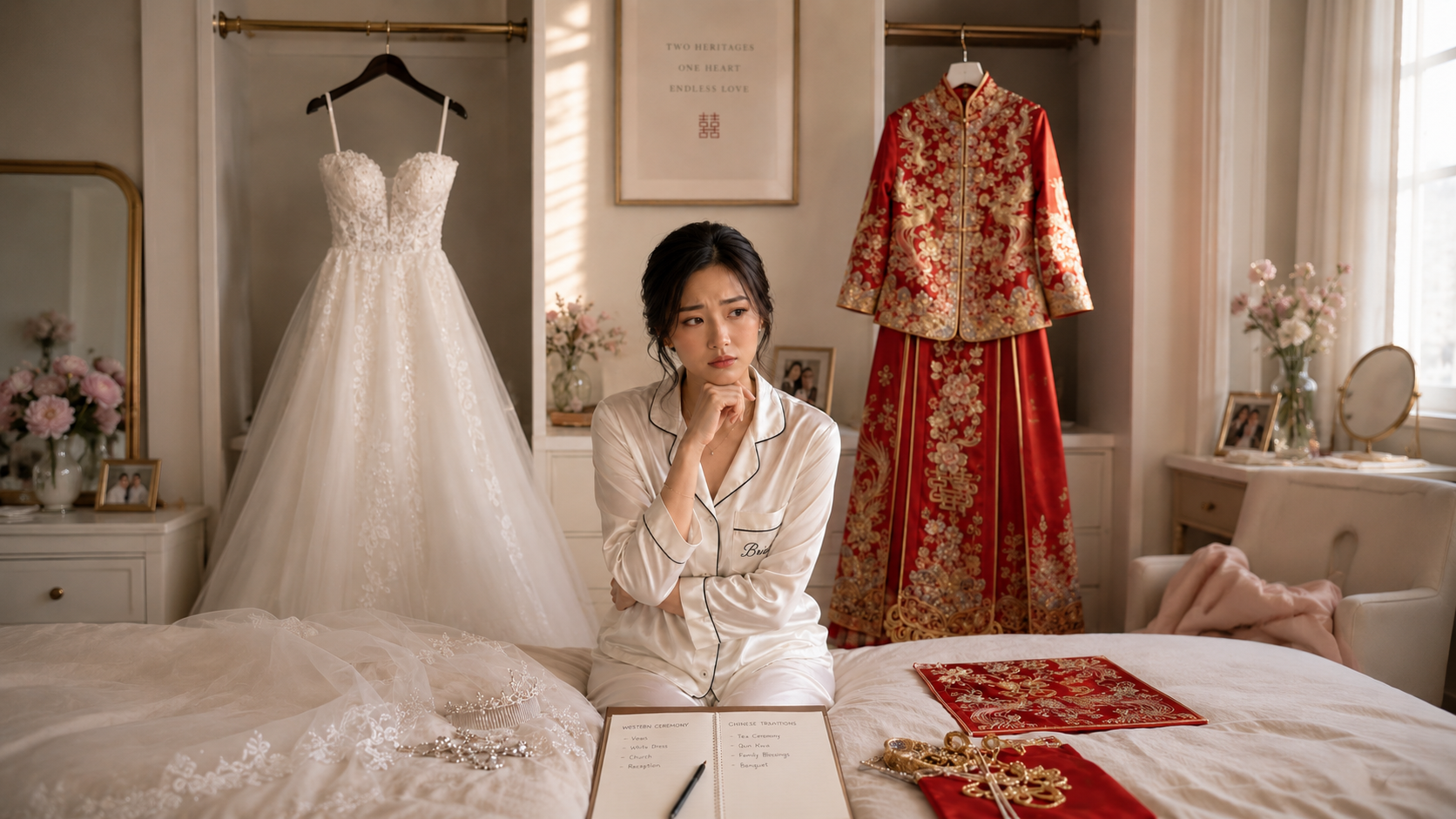
A Modern Chinese Wedding Guide for American Chinese Brides
No one handed us a manual for this.
Growing up as an American-born Chinese girl, you probably attended Chinese weddings without thinking much about them. You remember the banquet food, the loud "Yam Seng!" toasts, red envelopes tucked into your parents' purses, and maybe a bride wearing a beautiful red dress.
You watched it happen.
But no one ever stopped to explain why.
Then one day, you get engaged.
Suddenly, everyone has opinions.
Your mom asks if you've chosen a tea set.
Your grandmother asks whether you'll wear a kua.
Your aunt reminds you not to forget the red packets.
Your future mother-in-law wants to know when you'll serve tea.
Meanwhile, you're trying to decide between eucalyptus centerpieces and peonies while Googling:
"How does a Chinese tea ceremony work?"
If this sounds familiar, you're not alone.
The American Chinese Bride Dilemma
Many American Chinese brides grow up balancing two worlds.
At school, work, and with friends, life often looks very Western. You dream about walking down the aisle in a white gown, exchanging vows, and dancing at your reception.
But at home, family traditions still matter.
To your parents and grandparents, a wedding isn't just about two people falling in love.
It's about family.
Respect.
Blessings.
Honoring the people who raised you.
Passing traditions from one generation to the next.
The challenge is that many of us inherited the expectations without the explanations.
No one taught us the "why."
You Don't Have to Do Everything
One of the biggest misconceptions about Chinese weddings is that there is a right way to do them.
There isn't.
Some couples choose to include every tradition.
Others keep only a few meaningful ones.
Some combine Chinese customs with church ceremonies and Western receptions.
Others create entirely new traditions that reflect who they are.
Your wedding doesn't have to look exactly like your parents' wedding.
But before deciding what to keep or let go, it's worth understanding what these traditions represent.
Because when we understand the meaning behind them, they become less like obligations and more like opportunities.
The Chinese Wedding Traditions Many Bay Area Brides Choose
Tea Ceremony (敬茶)
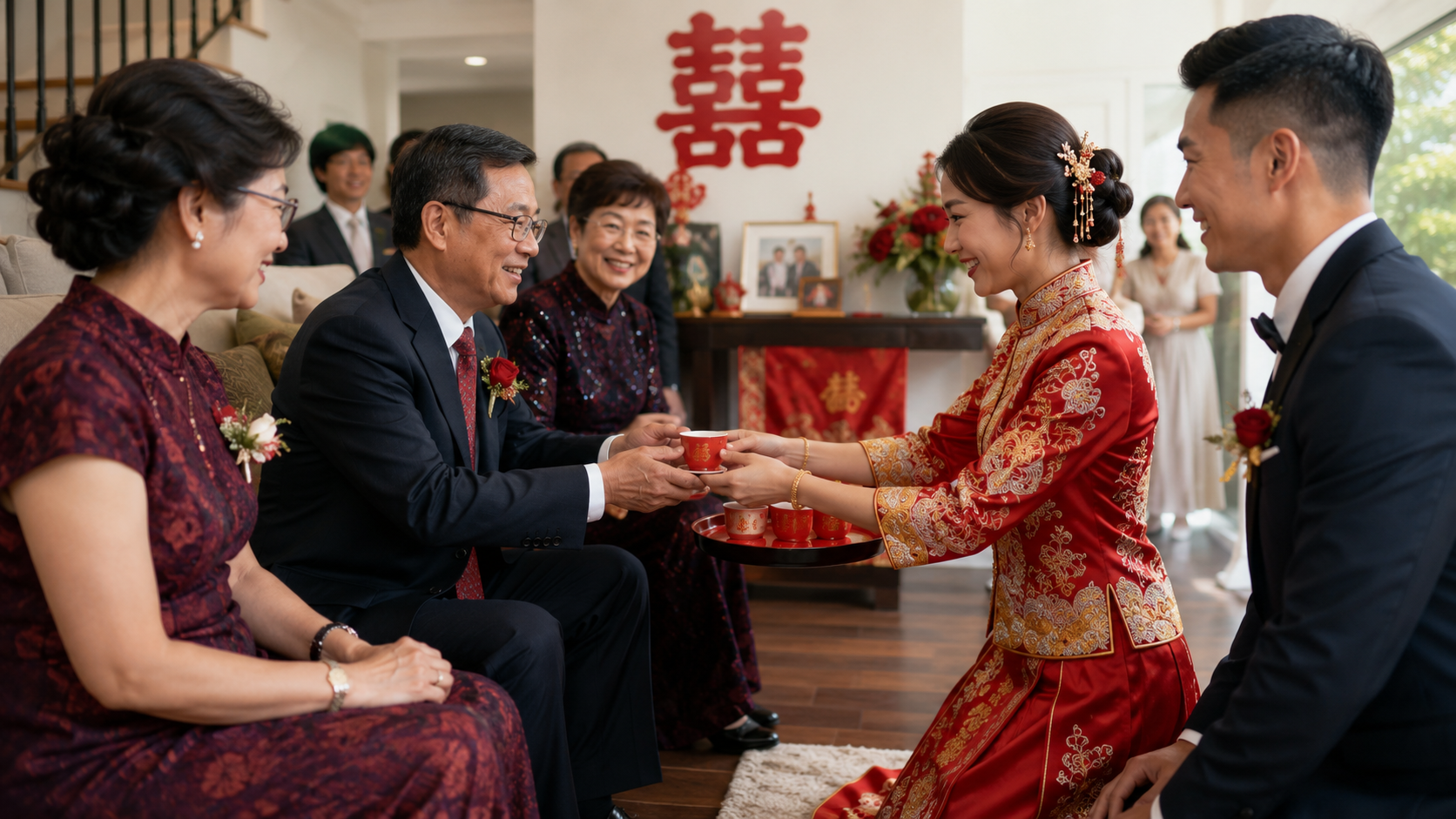
Often considered the heart of a Chinese wedding, the tea ceremony is a way of thanking parents and elders.
The couple serves tea according to family hierarchy and receives blessings, jewelry, and red envelopes in return.
More than anything, it's a moment of gratitude.
Qun Kwa (裙褂)
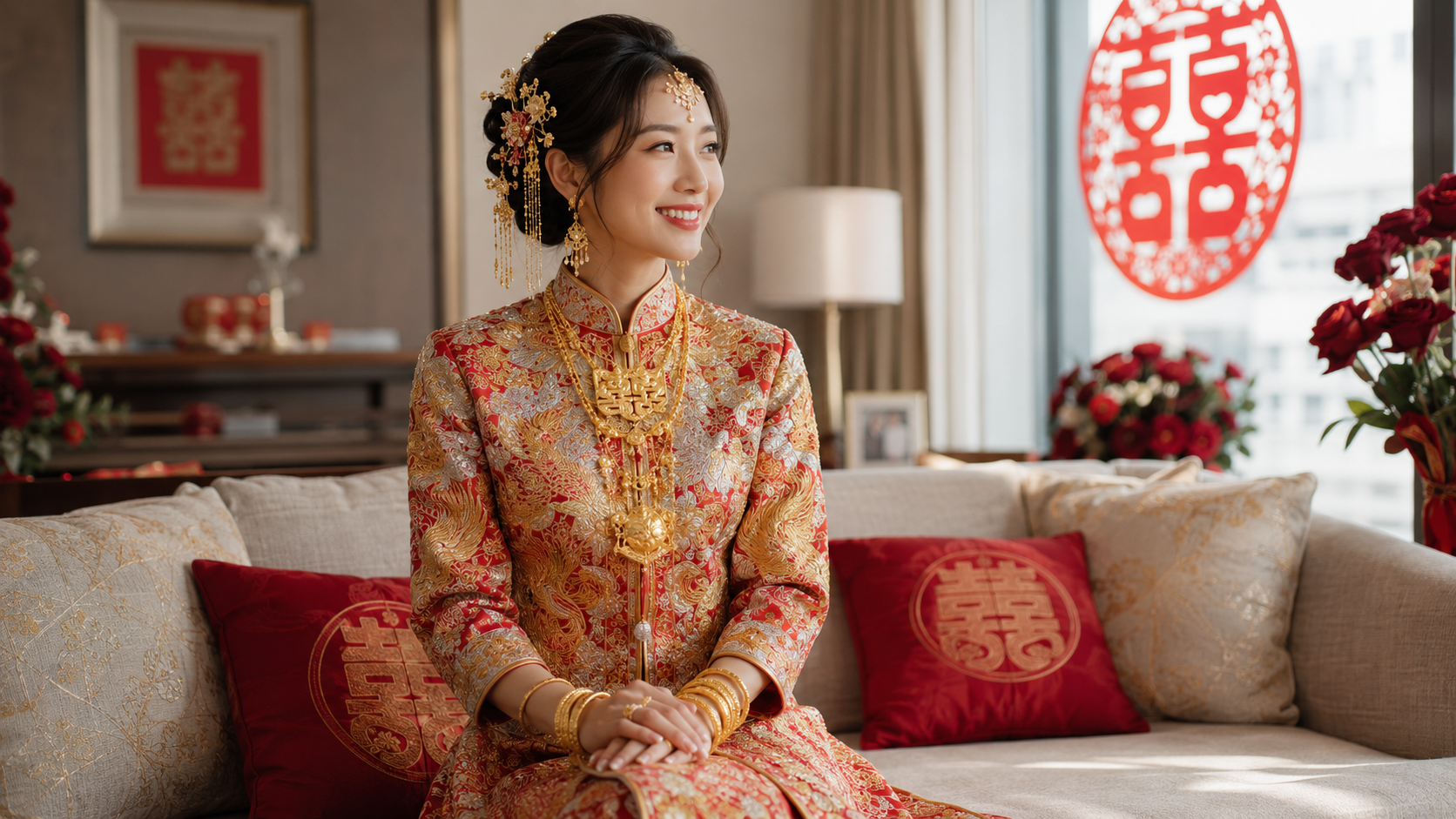
The traditional Cantonese bridal outfit worn during tea ceremonies.
With its dragon and phoenix embroidery, the kua symbolizes prosperity, harmony, and blessings for marriage.
For many brides, it's one of the few times in life they'll wear something so deeply connected to their heritage.
Door Games (接新娘遊戲)
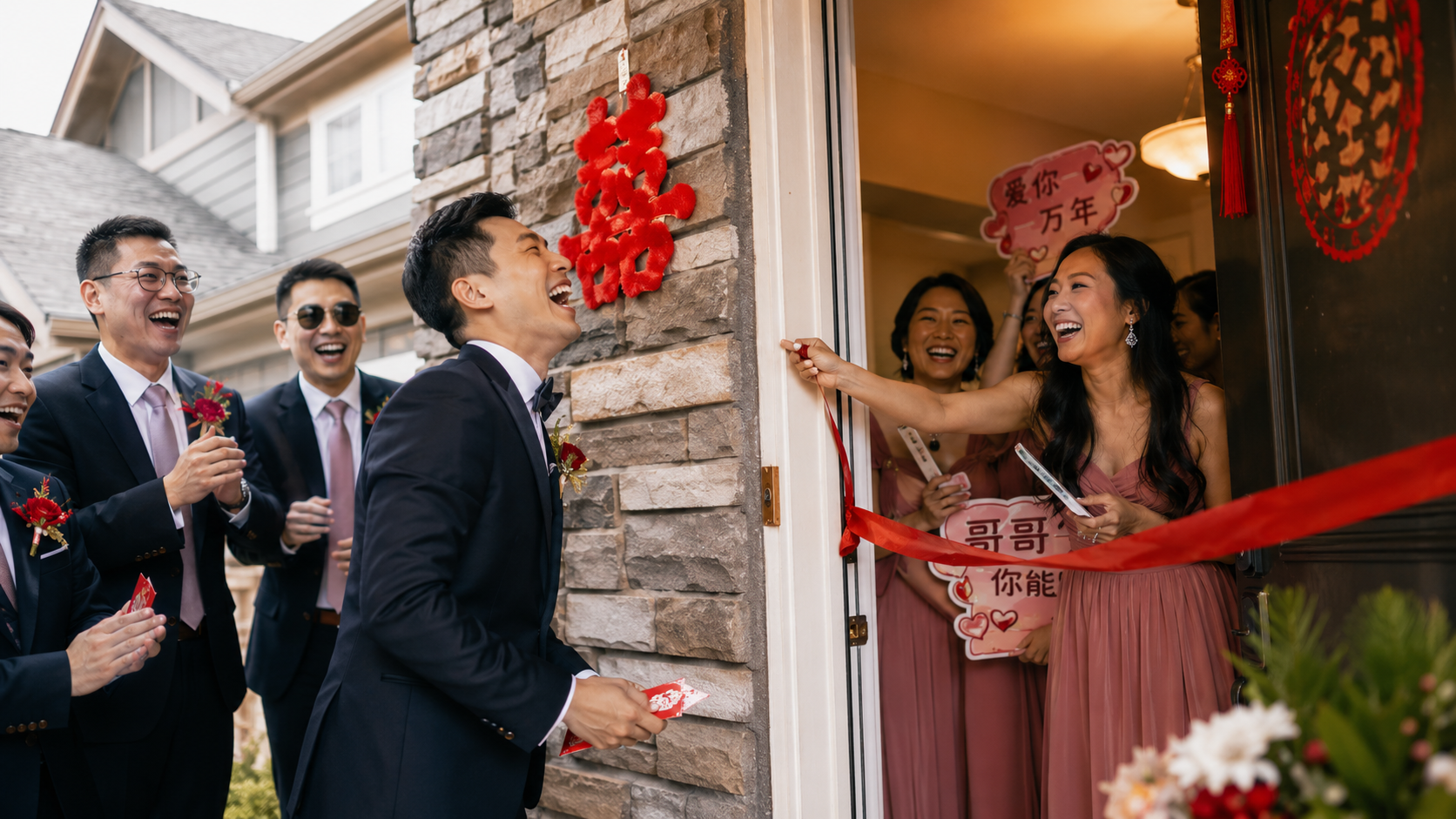
The playful challenges bridesmaids prepare for the groom before he "earns" the right to see his bride.
These games bring laughter and energy to the wedding morning while symbolizing the groom's dedication.
Yam Seng (飲勝)
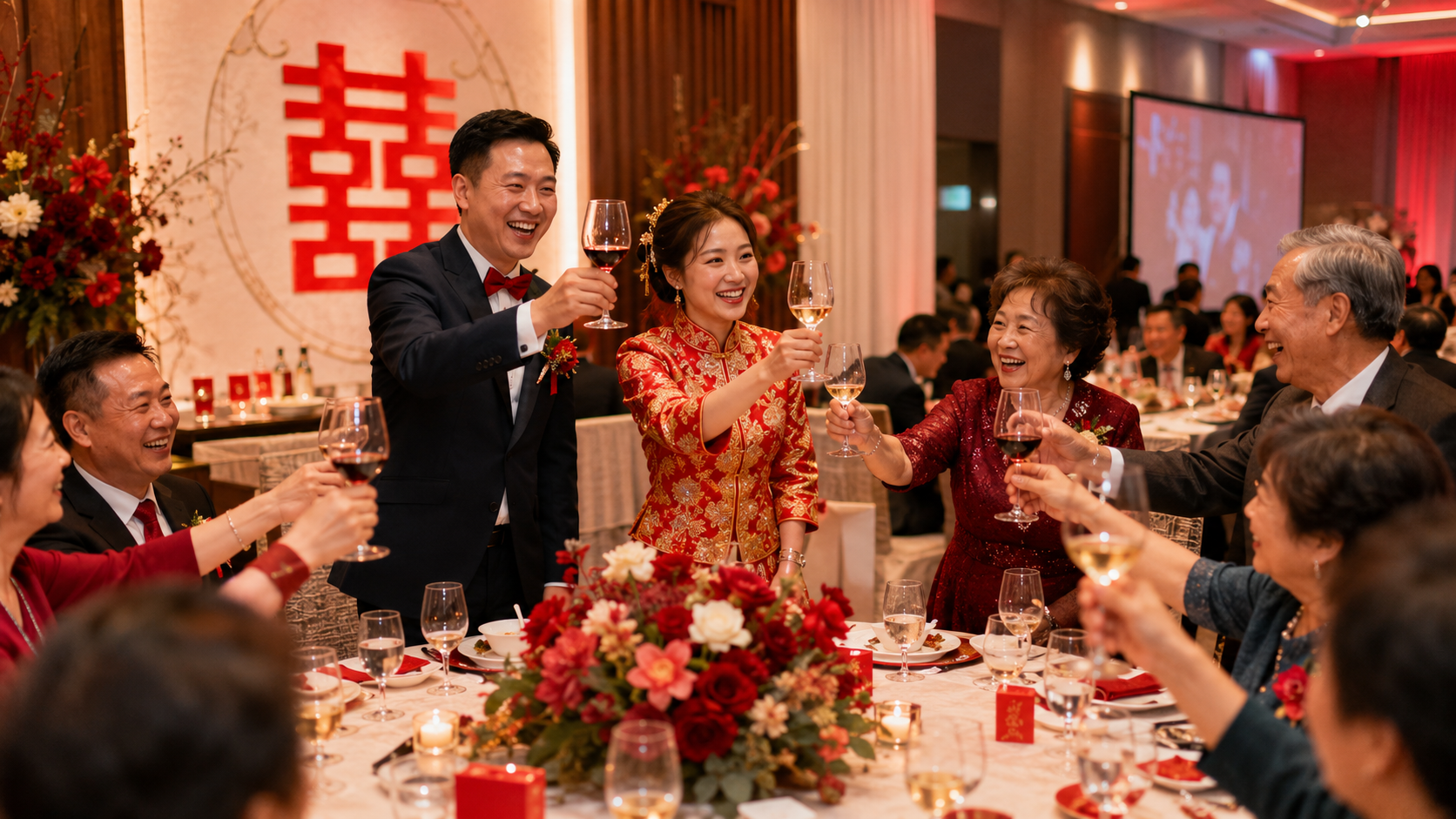
The joyful toasts shared during the banquet reception.
Family and friends gather to celebrate the newlyweds and offer their blessings for a happy marriage.
What If I Don't Speak Chinese?
You're still Chinese enough.
If you don't know how to pronounce every tradition, that's okay.
If you can't read Chinese characters, that's okay.
If you've never attended a tea ceremony before your own wedding, that's okay.
Your heritage isn't measured by how much you know.
It isn't determined by how fluent your Cantonese or Mandarin is.
Being Chinese isn't a test you either pass or fail.
Planning a Chinese wedding is often a journey of rediscovery.
It's an opportunity to ask questions, listen to family stories, and decide which traditions matter most to you.
What If I Don't Want Everything?
That's okay too.
Traditions should not be followed blindly.
They should be chosen intentionally.
Maybe you'll include a full tea ceremony.
Maybe you'll wear a kua for portraits before changing into your white gown.
Maybe you'll skip door games but still serve tea to your parents.
There is no perfect Chinese wedding.
Only a wedding that reflects your values, your relationship, and your family.
The Questions Worth Asking
As you begin planning, consider asking:
Which traditions are most important to our parents?
Which traditions are meaningful to us as a couple?
Are there customs we don't understand but would like to learn about?
What memories do we want to create and pass down someday?
Sometimes these conversations become some of the most meaningful parts of wedding planning.
You Don't Have to Figure It Out Alone
After years of working with Chinese brides in the Bay Area, I've seen the tears, the stress, the misunderstandings, and the beautiful moments that happen when generations come together.
I've also seen the relief on a bride's face when someone simply says:
"You don't have to know everything. We'll figure it out together."
As a Chinese bridal makeup artist, my job isn't only to help you look beautiful.
It's to understand the rhythm of a Chinese wedding morning, help you navigate outfit changes, prepare for tea ceremonies, and support you through one of the most important days of your life.
My hope is that this guide reminds you of something important:
You don't have to choose between being American and being Chinese.
You can honor your family's traditions while creating a wedding that feels authentically yours.
Because this isn't about recreating someone else's wedding.
It's about celebrating your love story while remembering the people and traditions that helped shape who you are.
And maybe, one day, the traditions you choose to preserve will become the stories your own children ask you to tell.
Planning a Chinese wedding and don't know where to start?
Download our free Bay Area Chinese Wedding Checklist and discover the traditions many modern ABC brides choose to include—without feeling overwhelmed.
