
Tea Ceremony Makeup vs. Western Bridal Makeup: Why Two Looks Can Make Your Wedding Day Feel Complete
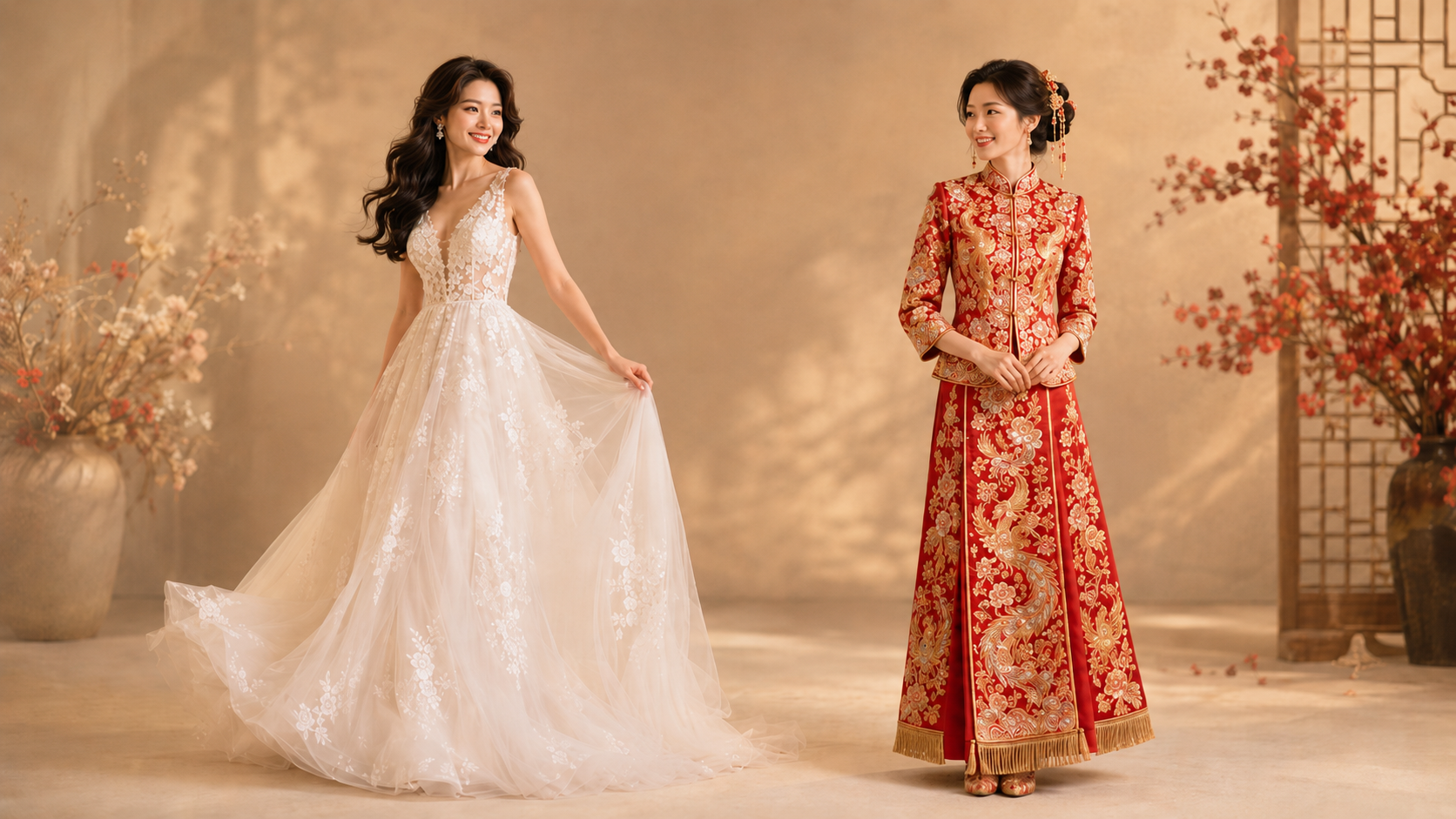
A question many Chinese American brides ask during wedding planning is:
“Do I really need two makeup looks for my tea ceremony and Western wedding ceremony?”
The honest answer is not always—but in many cases, yes, two intentional looks make a real difference.
A Chinese tea ceremony look and a Western bridal look do not need to make you look like two different people. The goal is not a dramatic transformation between outfits. The goal is to make sure your makeup, hair, color palette, and overall energy feel right for each meaningful part of your wedding day.
After more than 15 years working with brides, Sarah has seen this clearly: a white bridal gown, a red qipao, and a traditional kua each create a very different visual world.
The colors are different.
The fabrics are different.
The jewelry is different.
The cultural meaning is different.
The way each outfit photographs is different.
Your makeup should respond to that.
For Chinese American brides planning a tea ceremony, white gown ceremony, and reception, thoughtful beauty planning can help every part of the day feel polished, natural, and connected—without feeling overdone.
The Short Answer: Do You Need Two Bridal Makeup Looks?
You may not need a completely separate full makeup application.
But you will often benefit from a tea ceremony look with a planned transition into your Western bridal look.
For many brides, this means:
One strong, long-lasting makeup foundation
A tea ceremony color direction designed for a red kua or qipao
A hair change, accessory change, lip adjustment, blush adjustment, or eye refinement before the white gown ceremony
A beauty plan that considers photography, lighting, family portraits, weather, and the length of the wedding day
This approach keeps the day efficient while still allowing both looks to feel intentional.
A bridal makeup artist should not simply apply one makeup look in the morning and hope it works for every outfit. A wedding day with a Chinese tea ceremony and Western ceremony needs more strategy than that.
Why a Red Kua or Qipao Needs Different Makeup Than a White Bridal Gown
A white bridal gown creates a soft, light, romantic visual mood.
A red kua or qipao creates a richer, warmer, more ceremonial mood.
That difference matters.
A white gown often photographs against light backgrounds, florals, open spaces, churches, gardens, city halls, or elegant venues. The overall effect is usually airy, luminous, timeless, and romantic.
A kua or qipao often includes:
Strong red fabric
Gold embroidery
Gold jewelry
Jade or heirloom accessories
Red packets
Tea sets
Warm family interiors
Traditional Chinese details
More intimate family photography
These colors and textures can visually overpower makeup that is too soft, too pale, or too neutral.
At the same time, a makeup look created only for a rich red kua may feel too warm, too bold, or too structured once the bride changes into a white gown.
This is why the two looks should be connected—but not identical.
Tea Ceremony Makeup: Elegant Enough for Red, Gold, and Family Photos
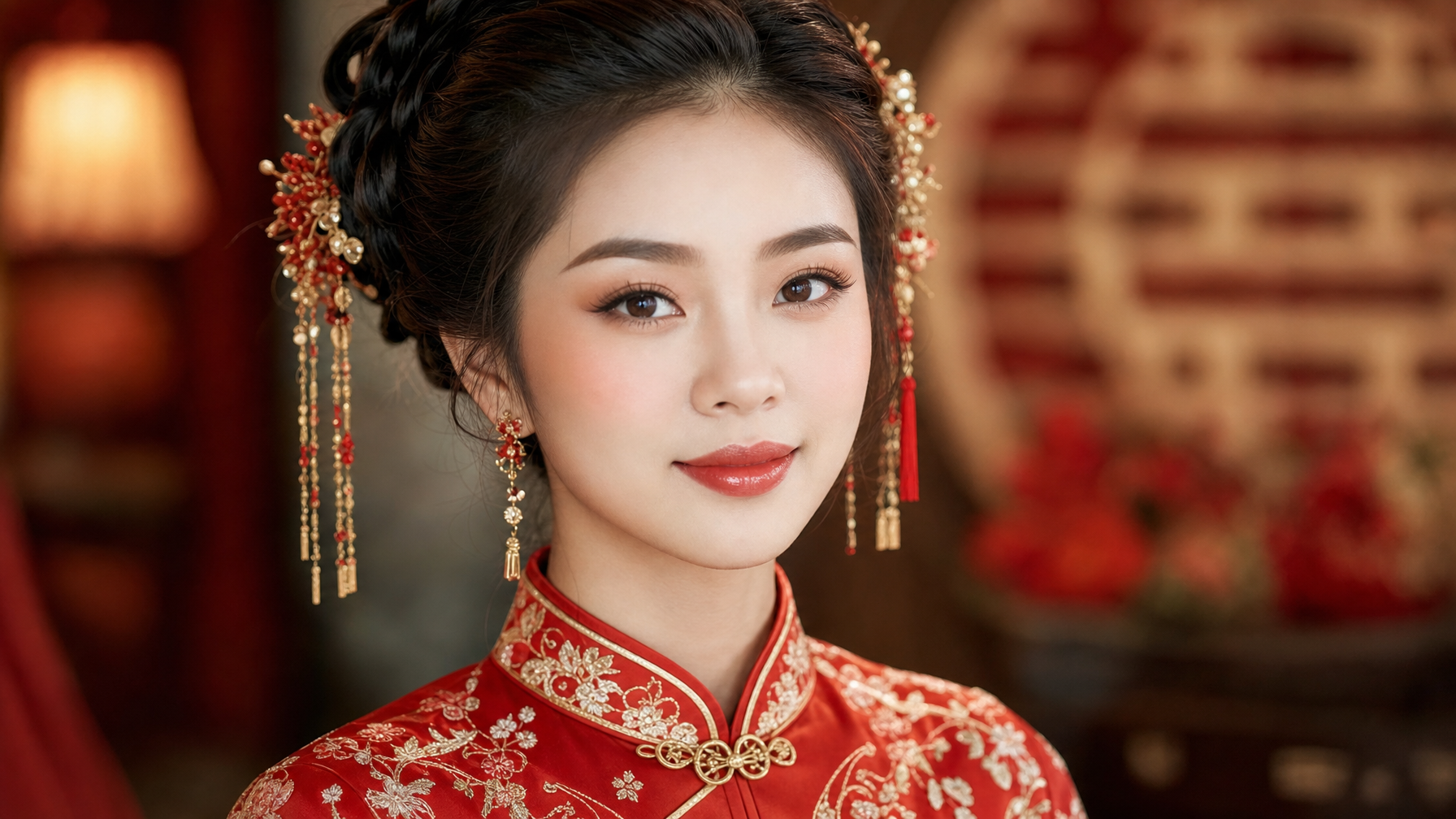
Chinese tea ceremony makeup needs to work with the cultural and visual weight of the moment.
A bride may be wearing a bright red kua, a fitted red qipao, gold jewelry from family, and hair accessories that carry traditional meaning. She may also be serving tea to parents and grandparents in close-up family photos that will be looked at for decades.
This is not the moment for makeup that disappears beside the outfit.
A refined tea ceremony makeup look often includes:
Natural, long-lasting skin that still looks polished in photos
Slightly stronger brow definition
Soft but visible eye structure
Lashes that open the eyes without looking overly dramatic
Warm blush placement that brings life to the face
A lip color that harmonizes with red and gold
Makeup that remains elegant during close-up family portraits
Hair styling that works with the neckline, jewelry, and kua or qipao silhouette
The key is balance.
Tea ceremony makeup should feel elevated enough to stand beside red and gold, while still looking like the bride—not a costume version of her.
Western Bridal Makeup: Softer, Lighter, and More Romantic
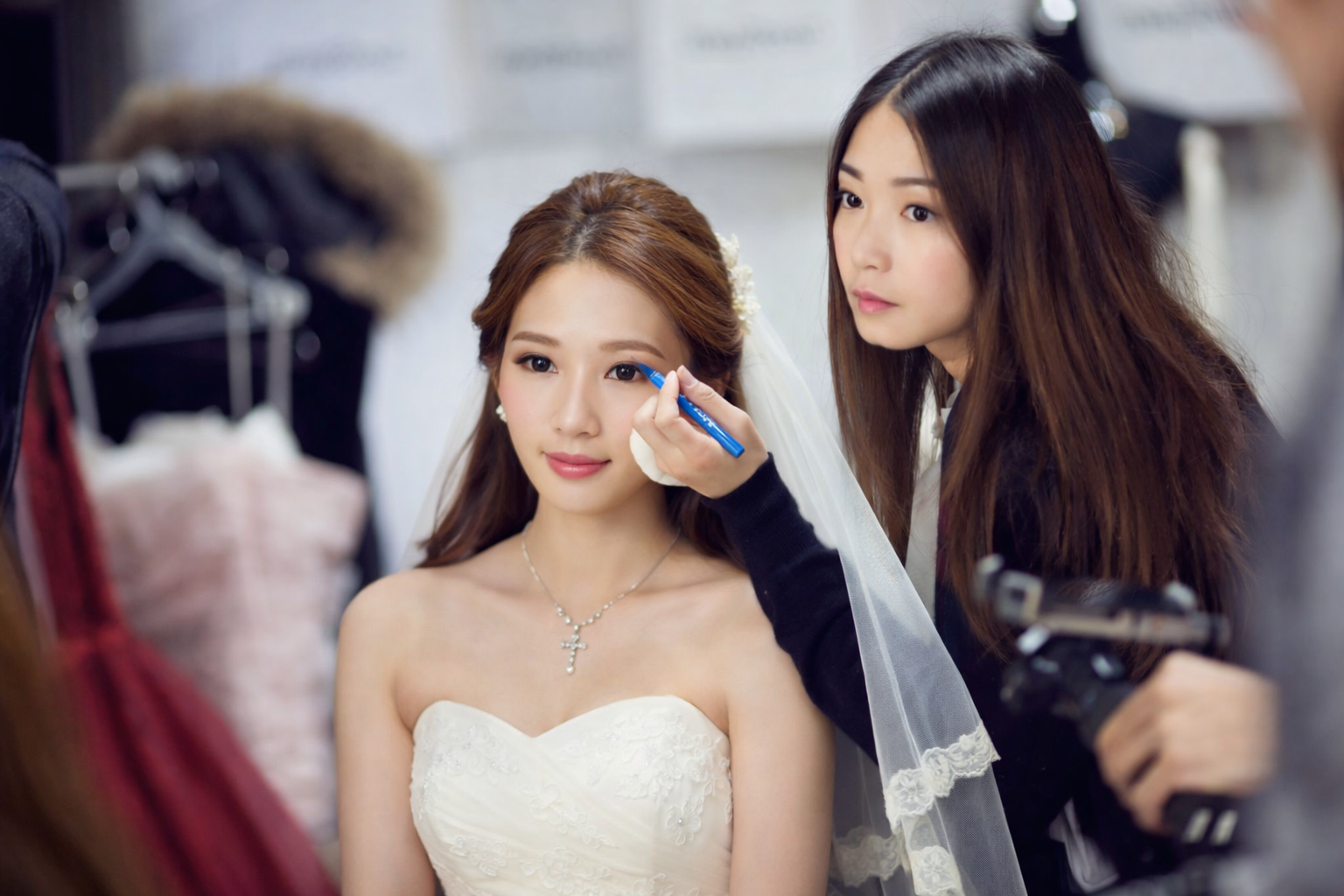
A white bridal gown usually calls for a different energy.
The dress itself is often softer in color and lighter in visual weight. The environment may include white flowers, ivory fabric, natural light, cathedral spaces, or neutral-toned venues.
For this reason, Western bridal makeup often leans more toward:
Fresh, luminous skin
Softer blush tones
Refined eye definition
Neutral or rosy lip colors
Gentle contour
More romantic color harmony
Hair that feels soft, polished, and effortless in photographs
This does not mean Western bridal makeup should be weak or invisible.
Natural bridal makeup still needs structure. It needs to hold up under photography, flash, tears, hugging, heat, and a long wedding day.
But the mood is different.
A Western bridal look often feels more airy, soft, romantic, and timeless. A tea ceremony look often feels warmer, more ceremonial, more defined, and more connected to red-and-gold cultural details.
The Difference Is Not Just Color—It Is the Entire Mood
Many brides think the difference between tea ceremony makeup and Western bridal makeup is simply changing to a red lipstick.
It is more thoughtful than that.
A makeup artist should consider:
The color of the dress
The embroidery or fabric texture
The bride’s skin tone
The jewelry
The hair accessories
The wedding venue
The lighting
The photography style
The amount of time available for transitions
Whether the bride will change hairstyles
Whether the bride wants a qipao, kua, and white gown look all in one day
For example, a red kua with gold embroidery may need warmth and definition so the bride’s face feels balanced beside the outfit.
A sleek red qipao may call for a cleaner, more fashion-forward look—perhaps a refined red lip, elegant eyeliner, or a sleek low bun.
A soft ivory gown may need a more romantic, luminous finish that works beautifully with natural light and delicate bridal styling.
The goal is not to follow a formula. It is to create beauty that belongs with the outfit and the moment.
Kua Makeup vs. Qipao Makeup: They Are Not Always the Same
Even within Chinese wedding attire, a kua and qipao often need different beauty direction.
Makeup for a Traditional Kua
A kua is often richly embroidered, highly detailed, and paired with gold jewelry.
Because the outfit has so much visual presence, the makeup often needs:
More structured brows
More visible eye definition
Slightly warmer blush
A balanced lip color that does not disappear beside the red fabric
A polished updo or half-up style
Hair accessories that complement, rather than compete with, the embroidery
The finished look should feel graceful, ceremonial, and timeless.
Makeup for a Modern Qipao
A qipao often has a cleaner, more fitted silhouette.
It may be red, ivory, champagne, pink, burgundy, or another color. Its beauty direction can be more fashion-led and flexible.
Depending on the dress, qipao makeup may include:
Softer skin with a refined glow
A clean eyeliner look
More delicate lashes
A classic red lip or modern rose lip
Sleek hair, Hollywood waves, or a polished low bun
Fewer but more intentional accessories
A qipao can feel traditional, modern, sensual, elegant, or editorial. The makeup should support the specific dress—not just the fact that it is Chinese.
What Does a Two-Look Wedding Day Usually Look Like?
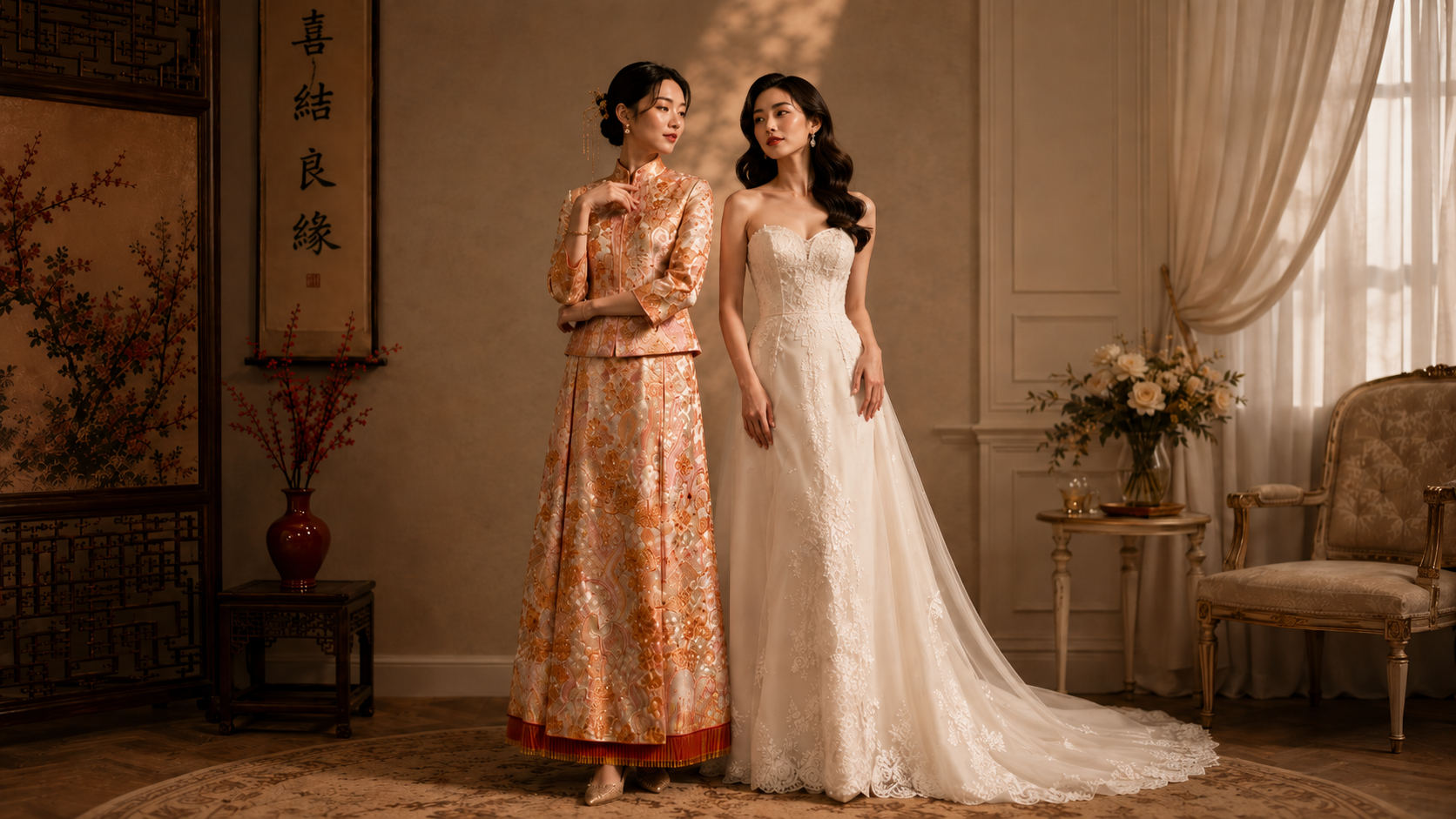
For many Bay Area Chinese American brides, the most practical approach is not two completely separate makeup applications.
It is a planned bridal beauty transition.
A typical structure may look like this:
Look One: Chinese Tea Ceremony
The bride begins the morning in a kua or qipao.
Her makeup is designed to complement red, gold, jewelry, tea ceremony photos, and family portraits. Her hairstyle may include a more traditional-inspired updo, gold hair accessories, or a style that works with the kua neckline.
Look Two: Western Ceremony
Before the ceremony, the bride changes into her white gown.
The makeup artist may refine the makeup by adjusting:
Lip color
Blush tone
Eye makeup
Highlight placement
Hair accessories
Hairstyle structure
Veil placement
Overall softness of the look
The goal is not to erase the first look. It is to shift it.
This saves time, protects the makeup’s longevity, and creates a more cohesive wedding day.
When One Makeup Look May Be Enough
Not every bride needs two looks.
One makeup look may work well when:
You are wearing only one outfit all day
Your tea ceremony is very small and simple
You have limited time between events
You are wearing a neutral-toned qipao or modern dress
Your Western ceremony and tea ceremony happen in the same venue
You prefer very minimal changes
Your wedding is more intimate or casual
Even in these cases, it is still wise to plan for at least a few adjustments.
A lipstick change, different hair accessory, added veil, blush refresh, or slight eye enhancement can help your look transition more naturally between the tea ceremony and Western ceremony.
When Two Looks Are Strongly Recommended
A two-look plan is especially valuable when:
You are wearing a traditional red kua
You are receiving substantial gold jewelry during the tea ceremony
You have a full tea ceremony with both families
You are changing into a white wedding gown later
You are having formal photography for both outfits
You have a church, venue, or city hall ceremony after the tea ceremony
You want a qipao or second dress for reception
You are planning a long wedding day with multiple cultural moments
Your family has strong expectations around the tea ceremony
You want each part of the wedding to feel distinct in your photos
For these weddings, one unchanged look can sometimes make the Chinese portion feel too soft or make the Western portion feel too heavy.
A planned transition gives each moment the attention it deserves.
Why Trial Makeup Matters for Chinese American Brides
A bridal makeup trial is not just about choosing eye shadow colors.
It is where you plan your entire wedding-day beauty strategy.
During a thoughtful bridal trial, you should discuss:
Your kua, qipao, and white gown
The colors and neckline of each outfit
Your jewelry and hair accessories
Your tea ceremony timeline
Your Western ceremony venue
Your photography style
Whether you want a veil
Whether you are changing hairstyles
Your skin concerns and makeup preferences
How long you need the makeup to last
Whether you want a tea ceremony lip color, Western bridal lip color, and reception lip color
A bride should not have to decide these things while getting ready on the wedding morning.
The trial creates a plan before the pressure of the day begins.
The Best Bridal Makeup Should Last Through Both Looks
A tea ceremony often begins early in the morning.
By the time the bride reaches her Western ceremony, reception, table toasting, and final photos, she may have worn her makeup for 10 to 14 hours.
That is why long-lasting bridal makeup matters.
A professional bridal makeup plan should consider:
Skin preparation
Product layering
Humidity and weather
Tears and emotional moments
Eating and drinking
Family hugs
Outfit changes
Flash photography
Touch-up strategy
Lipstick changes throughout the day
Beautiful makeup at 9:00 AM is not enough.
Bridal makeup should still look fresh, balanced, and photo-ready when guests are taking photos at night.
Frequently Asked Questions About Tea Ceremony and Western Bridal Makeup
Do I need two completely different makeup looks?
Not always. Many brides need one long-lasting base makeup look with intentional adjustments for the white gown ceremony. The amount of change depends on your outfits, schedule, and personal style.
Should I wear red lipstick with my kua?
A red lip can look beautiful with a kua, but it is not mandatory. The best shade depends on your skin tone, the red tone of the outfit, the gold embroidery, and how dramatic or natural you want the finished look to feel.
Can I wear the same hairstyle for my kua and white gown?
Yes, especially if you choose a versatile updo. You can change hair accessories, add a veil, soften the front pieces, or adjust the shape slightly to create a different mood.
Is tea ceremony makeup supposed to be more dramatic?
Not necessarily more dramatic—just more balanced against the richness of red, gold, embroidery, jewelry, and family photos. It should still look elegant and like you.
What should I bring to my bridal makeup trial?
Bring photos of your kua, qipao, white gown, jewelry, veil, hair accessories, venue, and wedding inspiration. The more visual context your artist has, the more intentional the final beauty plan can be.
Can I do tea ceremony makeup and Western bridal makeup with one artist?
Yes. Ideally, work with an artist who understands both Chinese wedding traditions and modern bridal beauty, so the two looks feel cohesive rather than disconnected.
Final Thoughts: You Do Not Need to Choose Between Tradition and Modern Bridal Beauty
A Chinese tea ceremony and a Western wedding ceremony tell different parts of your story.
One honors your family, heritage, and the generations who came before you.
The other celebrates your relationship, your vows, and the future you are building together.
Your bridal makeup should be able to honor both.
For many Chinese American brides, two intentional looks are not about excess. They are about giving each moment the care it deserves.
At Sarah Image, Sarah helps Bay Area Chinese and Asian brides create natural, elegant, long-lasting bridal makeup and hair for tea ceremonies, kua and qipao looks, Western ceremonies, family portraits, and wedding-day photography.
The goal is simple: you should look like yourself—just fully prepared for every meaningful part of your wedding day.
Planning a Chinese tea ceremony and Western wedding in the Bay Area? Explore Sarah Image’s Chinese Bridal Makeup Experience for customized wedding-day makeup, hair, and beauty planning.
