
The Chinese Tea Ceremony, Made Clear: A Guide for Chinese American Brides
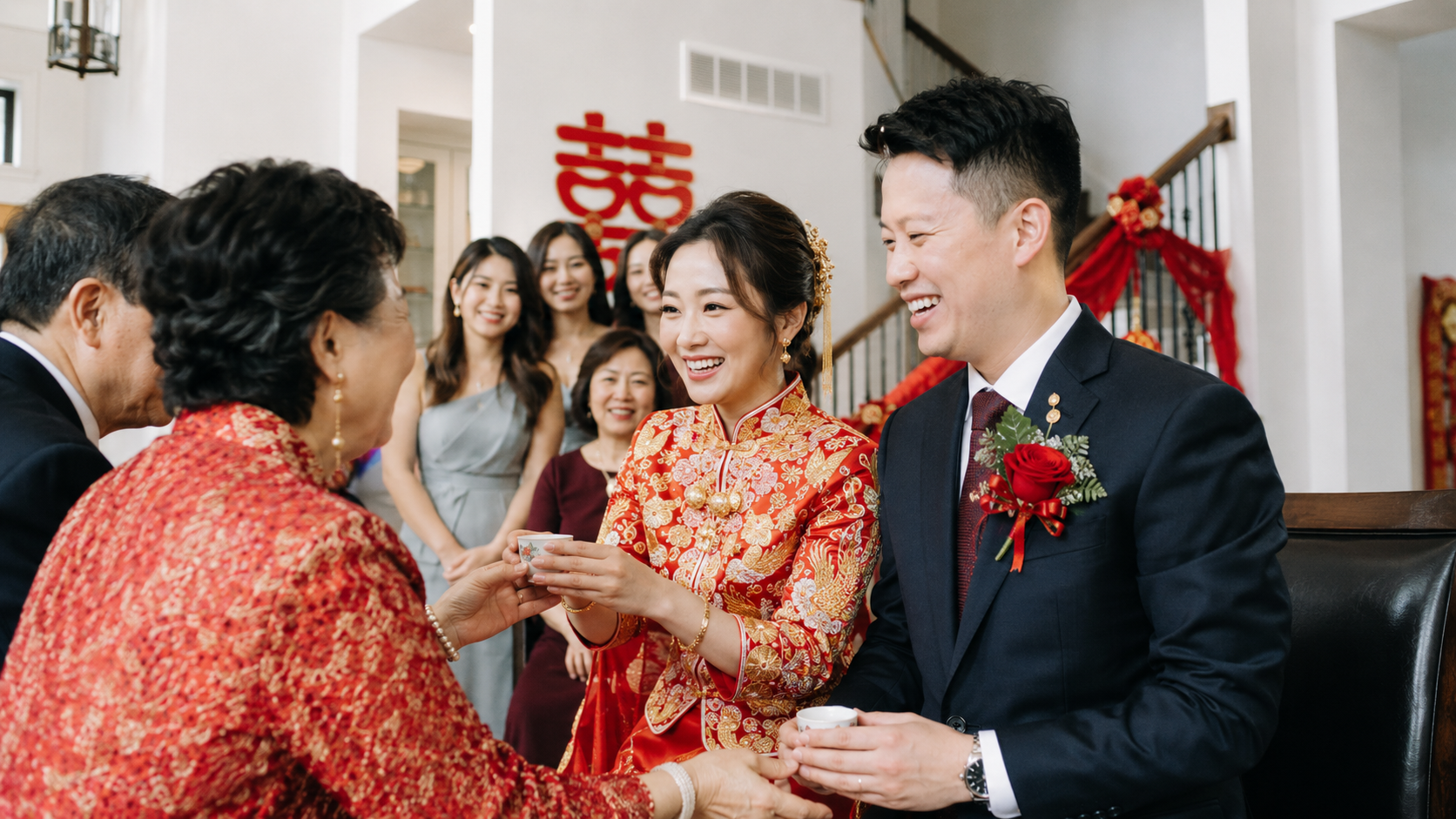
For many Chinese American brides, the Chinese tea ceremony is one of the most meaningful parts of the wedding day—and also one of the most confusing.
You may have grown up seeing photos of your parents, cousins, or family friends serving tea in red wedding outfits. You may know it matters deeply to your parents or grandparents. But when it becomes your wedding, the questions start coming quickly:
Who do we serve tea to first?
Do we do it at both homes?
Do we need to wear a kua?
What should we say?
What happens if our families have different expectations?
Can we still make it feel modern and like us?
The answer is yes.
A Chinese wedding tea ceremony does not have to feel intimidating, overly formal, or disconnected from your life in America. At its heart, it is a moment of respect, gratitude, and family blessing. It is a way for you and your partner to honor the people who raised you while beginning your marriage with intention.
This guide explains what a Chinese tea ceremony is, how it usually works, and how modern Chinese American couples can make it meaningful without feeling overwhelmed.
What Is a Chinese Wedding Tea Ceremony?
A Chinese wedding tea ceremony, often called 敬茶 (jing cha), is a traditional wedding ritual where the couple serves tea to parents, grandparents, and senior relatives.
In return, elders offer blessings, red envelopes, jewelry, or other gifts for the newly married couple.
More than a photo opportunity, the tea ceremony represents several important values in Chinese culture:
Respect for parents and elders
Gratitude for the family who raised you
The joining of two families
Blessings for a prosperous and harmonious marriage
A formal welcome into each other’s family
For Chinese American brides, this can be one of the rare wedding-day moments where generations, languages, family history, and personal identity all come together in one room.
Why the Tea Ceremony Matters So Much to Chinese Parents
A Western wedding ceremony often centers on the couple making vows to one another.
A Chinese tea ceremony adds another layer: it recognizes that marriage is not only the joining of two individuals. It is also the joining of two families.
For many Chinese parents, especially parents who immigrated to the United States, this ritual carries emotional weight. It may remind them of their own wedding, their parents, the traditions they grew up with, or the sacrifices they made to build a life for their children.
That does not mean you have to follow every tradition exactly. But understanding the deeper meaning can help you make better decisions when family opinions become strong.
The tea ceremony is often not about “doing things the old-fashioned way.” It is about giving parents and grandparents a moment of honor, recognition, and joy.
When Does the Chinese Tea Ceremony Happen?
There is no single rule, especially for modern Chinese American weddings.
Many couples choose one of these formats:
Option 1: Tea Ceremony on the Wedding Morning
This is one of the most common formats.
The couple may begin at the bride’s family home or hotel suite, then travel to the groom’s family home or another location to serve tea to the groom’s side.
This format works well when you want to include traditional moments such as:
Door games
Fetching the bride
Bride’s family tea ceremony
Groom’s family tea ceremony
Kua or red Chinese wedding attire
Family portraits before the Western ceremony
Option 2: One Combined Tea Ceremony
Many Bay Area couples choose one tea ceremony with both families together.
This can be easier when:
Families live far apart
The wedding timeline is tight
You are getting ready at a hotel or venue
You want a calmer morning
You have a mixed Chinese and non-Chinese family
A combined tea ceremony can still feel respectful and traditional. The key is creating a thoughtful order and making sure the important elders are honored.
Option 3: Tea Ceremony on a Separate Day
Some couples hold the tea ceremony the day before the wedding, after a rehearsal dinner, or during a small family gathering.
This can be a strong option for couples who want to slow down and give the ritual more emotional space.
It also helps when the wedding day already includes a church ceremony, a large venue timeline, multiple outfit changes, or a long reception.
Who Do You Serve Tea To?
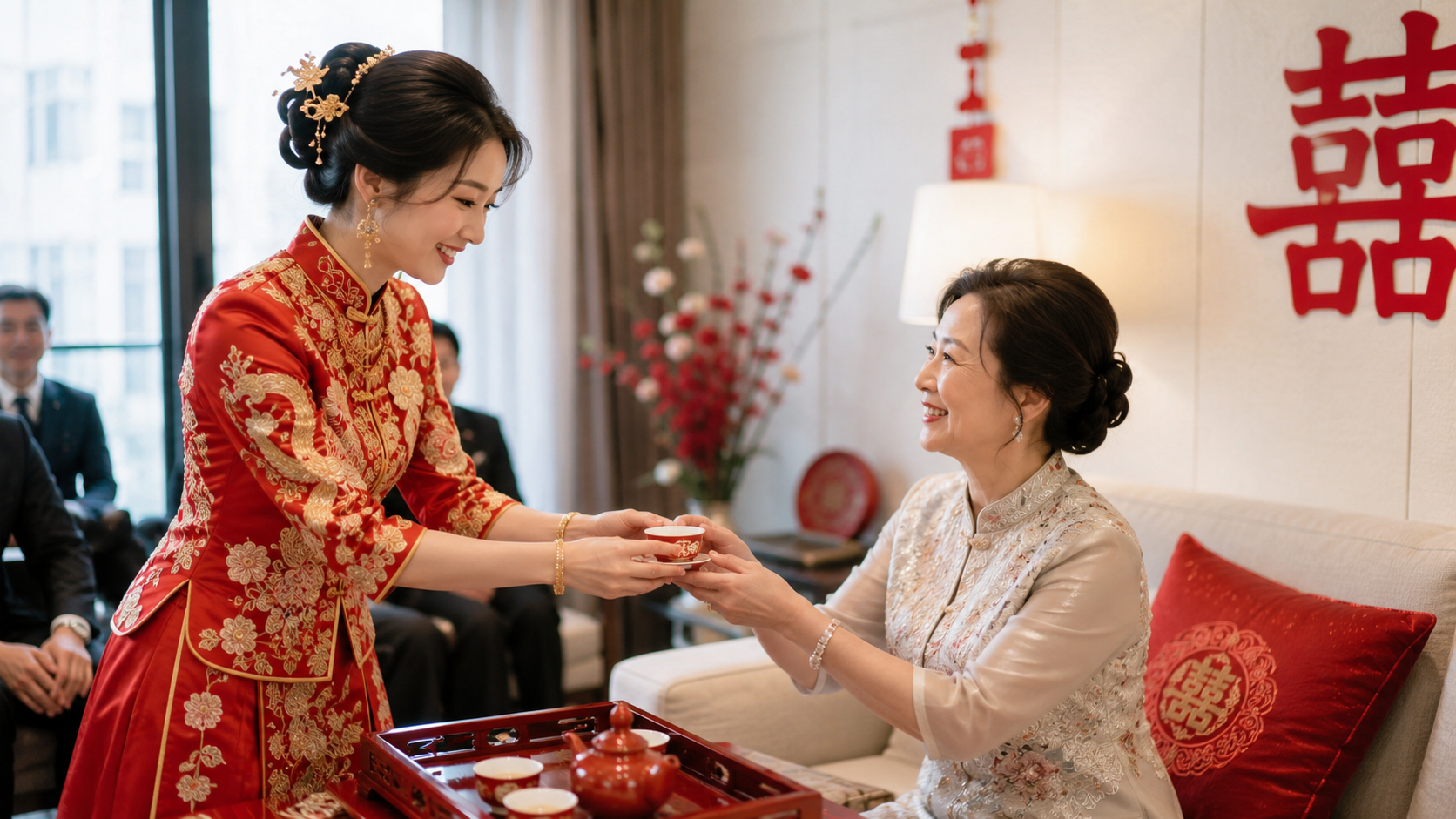
Traditionally, tea is served to relatives in order of seniority.
The exact order can vary by family, region, and whether the ceremony is happening with the bride’s family or the groom’s family. In general, start with the most senior relatives present.
A typical order may include:
Grandparents
Parents
Aunts and uncles
Older siblings or senior cousins, depending on family custom
Some families include only parents and grandparents. Others include a larger group of aunts, uncles, godparents, or senior relatives.
There is no need to guess alone. Before the wedding, ask one organized family member from each side to help create the serving order.
This simple step prevents confusion, delays, and last-minute family tension.
What Do You Say During a Chinese Tea Ceremony?
Many brides worry about saying the “right” thing.
In reality, you do not need a long speech. The gesture itself carries the meaning.
Traditionally, the couple addresses each elder using the correct family title, offers tea with both hands, and says a respectful phrase.
For example:
“Mom and Dad, please have tea.”
“Grandma, please have tea.”
“Uncle, please have tea.”
“Auntie, please have tea.”
Families may say this in Cantonese, Mandarin, English, or a mix of languages.
For a Chinese American wedding, it is completely appropriate to use English if that is what feels natural to you. You can also have a parent or relative help you practice the family titles beforehand.
The most important thing is not perfect pronunciation. It is showing respect and presence in the moment.
What Happens After You Serve the Tea?
After receiving tea, elders usually offer blessings to the couple.
They may say wishes for:
A loving marriage
Good health
Harmony
Prosperity
Happiness
A strong family
A joyful future together
They may also give:
Red envelopes, known as lai see or hong bao
Gold jewelry
Jade jewelry
Heirloom pieces
Watches
Other meaningful gifts
In many Cantonese families, gold jewelry is a particularly visible and emotional part of the ceremony. Brides may receive gold necklaces, bracelets, bangles, or pendants from mothers, grandmothers, and aunts.
These pieces are not just accessories. They often represent blessing, protection, family love, and the celebration of a new chapter.
What Tea Should You Use?
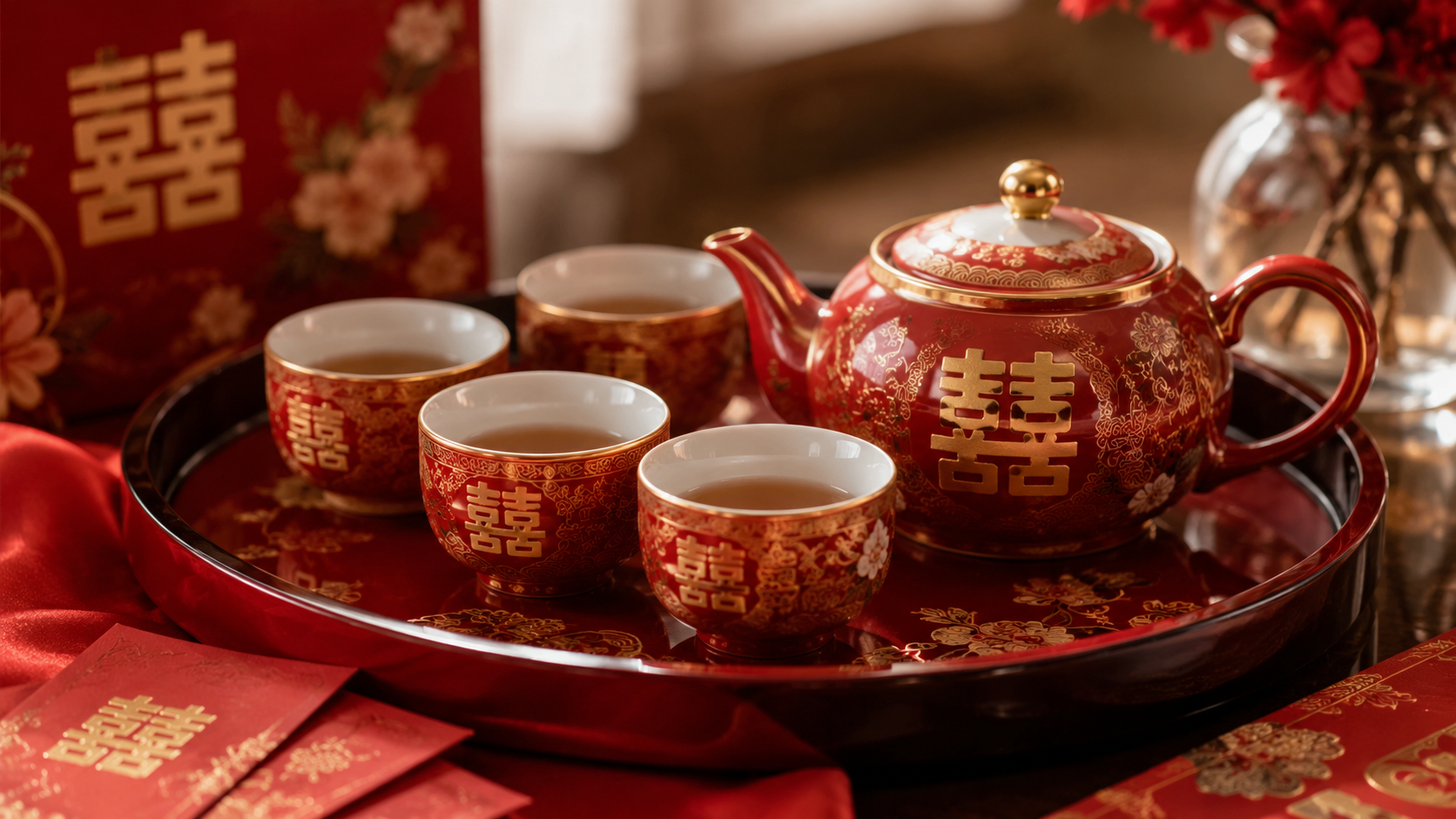
The tea should be simple, warm, and easy for elders to drink.
Popular choices include:
Sweet red date tea
Longan tea
Lotus seed tea
Traditional Chinese tea
Tea sweetened with red dates or dried longan
Red dates and lotus seeds are often included because they carry symbolic meanings connected to sweetness, prosperity, family, and blessing.
That said, your family may have its own preferred tea. Some families keep it very traditional, while others choose a simple tea that photographs beautifully and is easy to prepare.
The tea itself matters less than making sure it is served smoothly, safely, and respectfully.
What Should a Chinese Bride Wear for the Tea Ceremony?
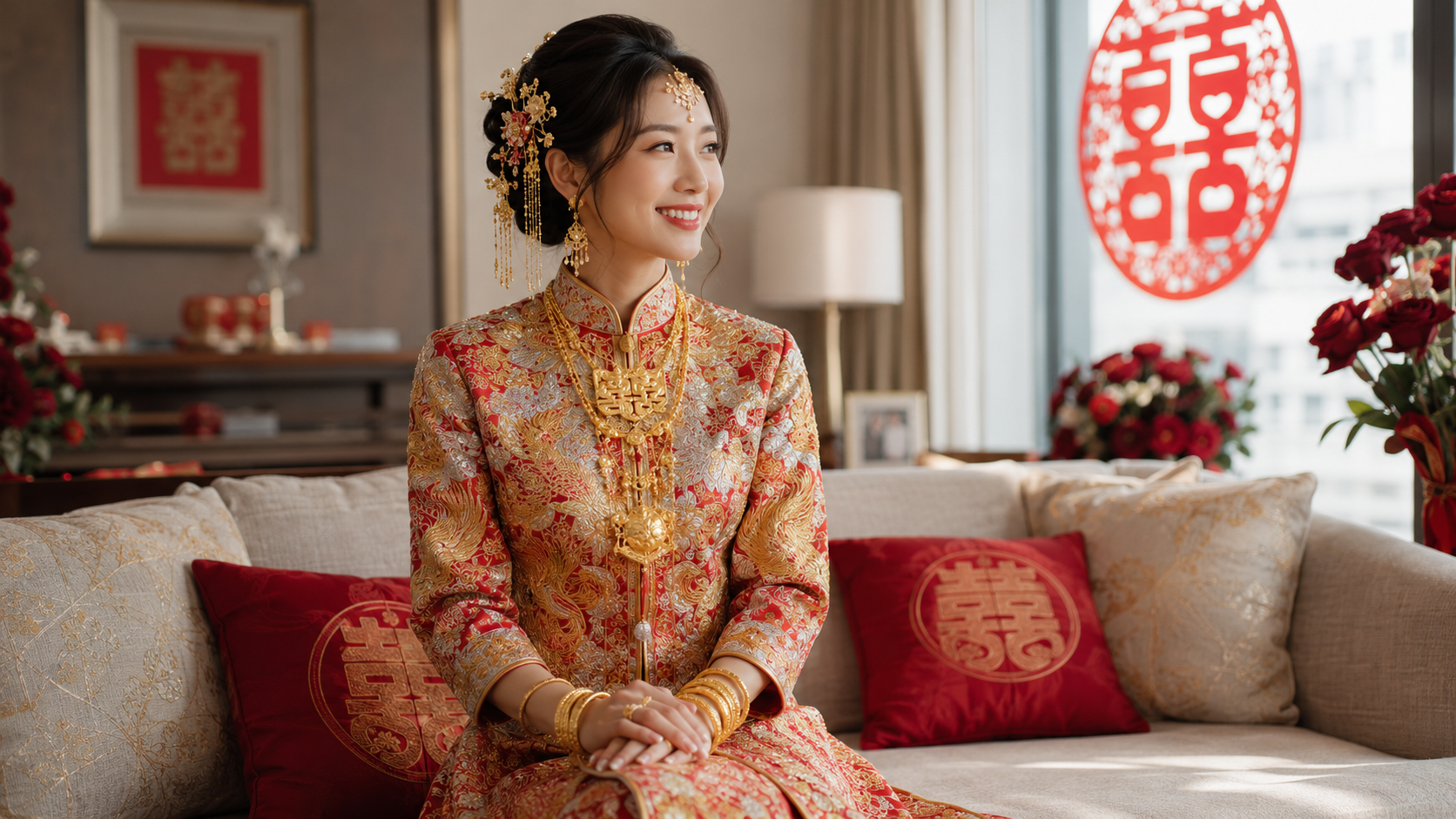
Many Chinese American brides choose to wear a kua or qun kwa (裙褂) for the tea ceremony.
A kua is traditionally a red Chinese bridal outfit with gold embroidery. It is especially common in Cantonese wedding traditions and often features symbols such as dragons, phoenixes, flowers, or peonies.
A kua can make the tea ceremony feel instantly ceremonial, meaningful, and visually connected to heritage.
Other popular options include:
A modern kua with a cleaner silhouette
A red qipao or cheongsam
A two-piece Chinese bridal outfit
A red reception dress
A white dress with Chinese-inspired details
A traditional outfit for tea ceremony photos, followed by a white gown for the Western ceremony
There is no one “correct” Chinese wedding outfit.
The best choice is one that respects your family traditions while still making you feel confident, beautiful, and like yourself.
Tea Ceremony Makeup for a Kua or Red Chinese Bridal Look
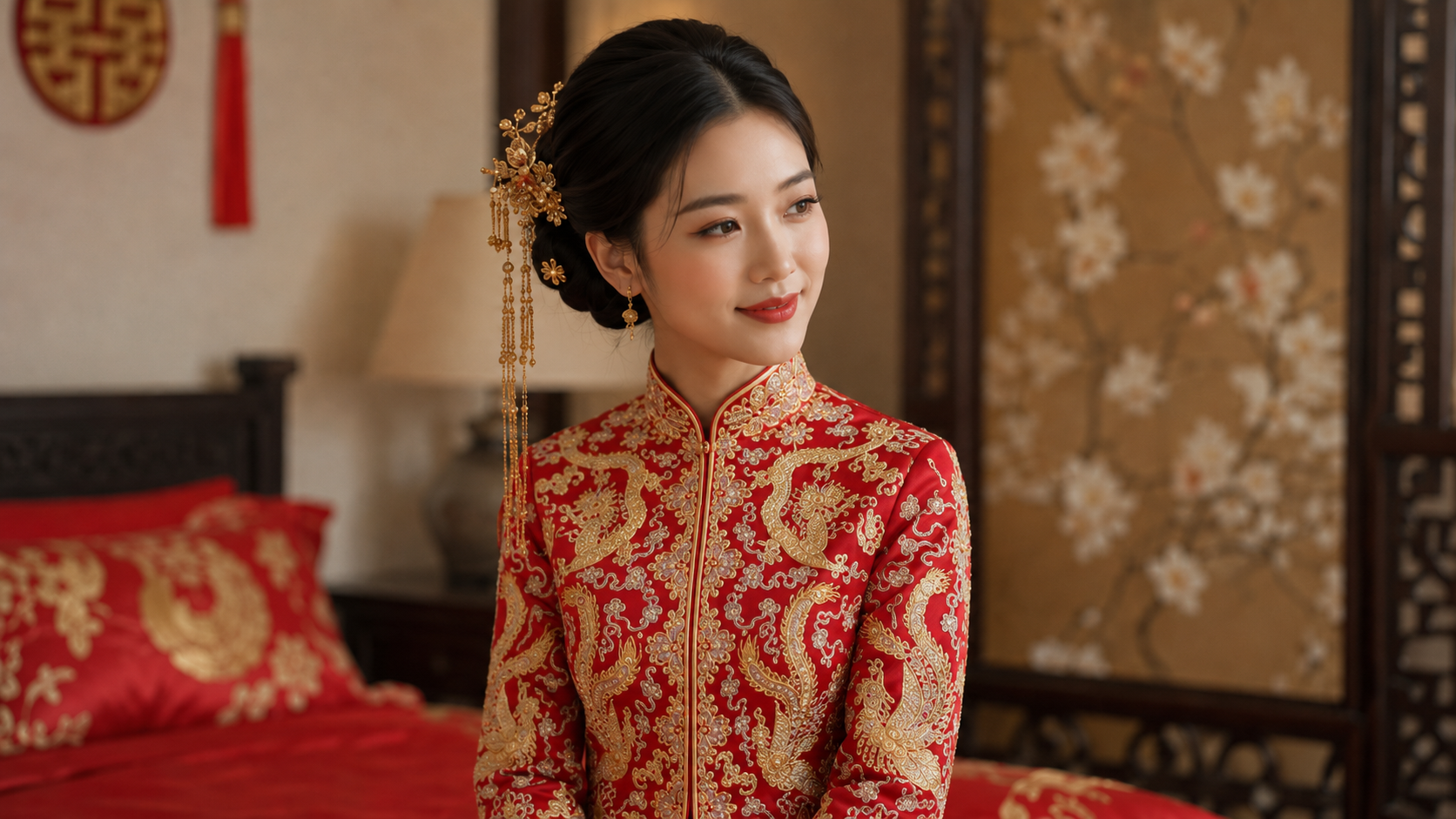
A tea ceremony look should feel different from everyday makeup, but it should not feel heavy, overdone, or disconnected from your face.
For brides wearing a red kua, makeup usually needs enough structure to balance the richness of the outfit, gold embroidery, jewelry, and photography. At the same time, the look should remain elegant and natural enough to feel timeless when you look back at your photos years later.
A refined Chinese bridal tea ceremony makeup look often includes:
Long-lasting, natural-looking skin
Soft sculpting that holds up in photographs
Defined but elegant eyes
Lashes that open the eyes without looking too dramatic
Blush placement that brings warmth and life to the face
Lip color that works with red, gold, and your skin tone
A hairstyle that supports the kua neckline, jewelry, and hair accessories
For many brides, the best tea ceremony makeup is not necessarily the same as their Western ceremony makeup.
A kua often needs a little more warmth, definition, or color balance than a white gown. The goal is not to create a completely different person. The goal is to make sure your face still looks polished, awake, elegant, and balanced beside the richness of the outfit.
Do You Need Door Games Before the Tea Ceremony?
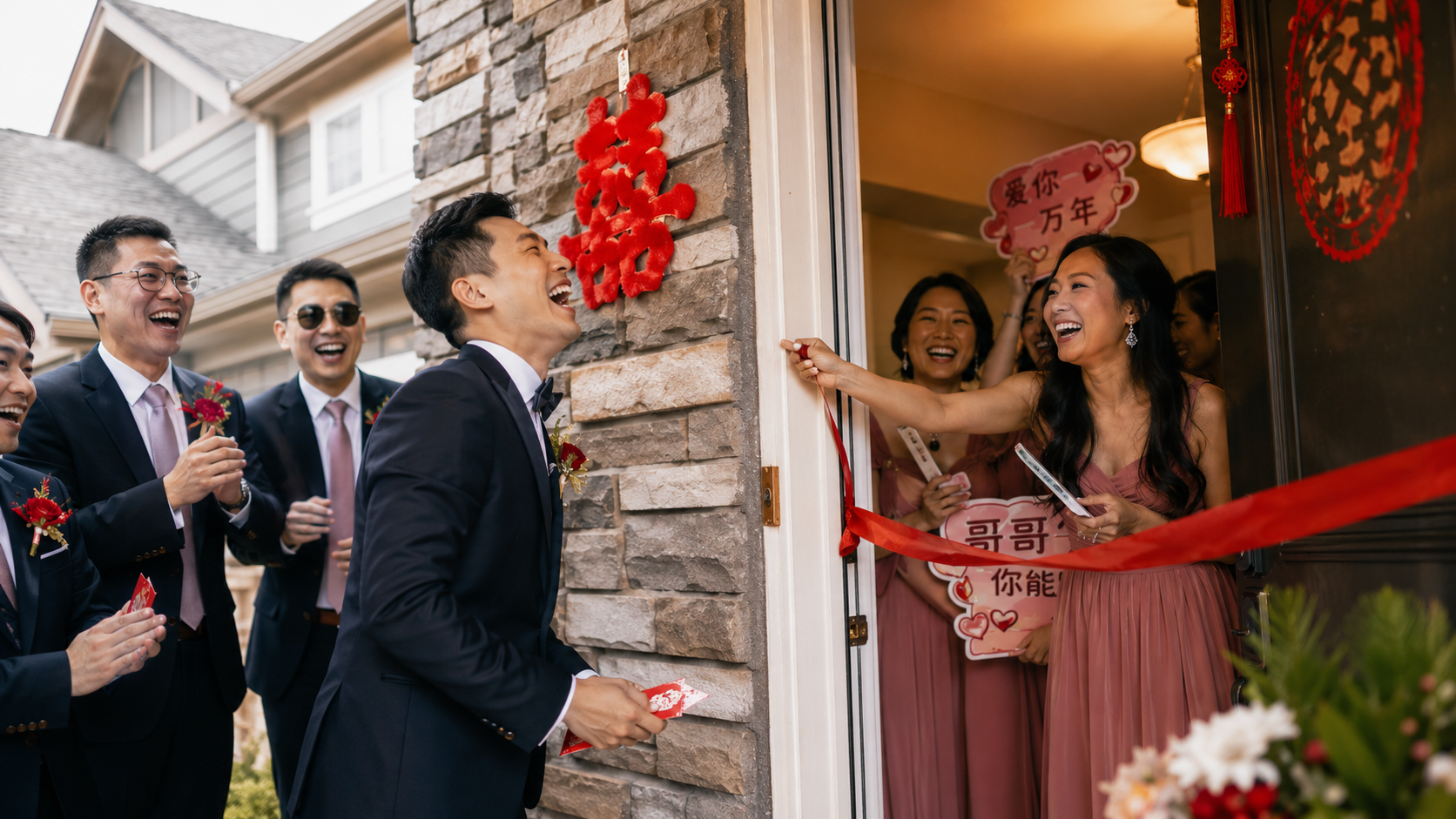
Not necessarily.
Door games, sometimes called 接新娘遊戲, are a playful tradition where bridesmaids challenge the groom and groomsmen before allowing the groom to “pick up” the bride.
They can include:
Questions about the bride
Singing or dancing challenges
Funny tasks
Red-envelope negotiations
Promises from the groom
Lighthearted games with the bridal party
Door games can be fun, energetic, and memorable. But they are optional.
For couples planning a calmer, more elegant wedding morning, it is completely acceptable to skip them. You can also keep them short—15 to 20 minutes is usually enough to create laughter without throwing off the entire timeline.
The tea ceremony is the emotional center. Door games are simply one possible part of the celebration.
A Simple Chinese Tea Ceremony Timeline
Here is an example of a modern wedding-morning timeline:
7:00 AM — Bridal hair and makeup begins
The bride gets ready with her family or bridal party.
9:30 AM — Groom and groomsmen arrive
Door games, red-envelope exchange, and bride pickup.
10:00 AM — Tea ceremony with the bride’s family
The couple serves tea to grandparents, parents, and senior relatives.
10:30 AM — Family portraits
Photos with parents, siblings, grandparents, and extended family.
11:00 AM — Travel or transition to the groom’s family ceremony
The couple travels to the groom’s family home, hotel suite, or venue.
11:30 AM — Tea ceremony with the groom’s family
The bride is welcomed into the groom’s family, and the couple serves tea to elders.
12:00 PM — Additional family portraits and lunch
A short break before changing into Western ceremony attire.
Your own schedule may look very different. The important thing is to give the ceremony enough time. Rushing through tea service can make elders feel overlooked and can create unnecessary stress.
For most couples, plan at least 30 to 45 minutes per family, plus time for photos, outfit adjustments, and transitions.
How to Make the Tea Ceremony Feel Modern Without Losing Meaning
You do not have to choose between “fully traditional” and “fully Western.”
Modern Chinese American weddings can honor heritage in ways that feel personal, stylish, and practical.
Consider these options:
Hold one combined tea ceremony instead of traveling between two homes.
Use a modern red kua with cleaner embroidery.
Include English explanations for non-Chinese family members.
Have a sibling or cousin act as emcee and guide the order.
Use heirloom jewelry, family photos, or meaningful tea sets.
Keep door games short and respectful.
Include a small bilingual ceremony program.
Serve tea to parents and grandparents only for a more intimate experience.
Use a hotel suite, private room, or wedding venue instead of a family home.
Create a separate quiet moment with each set of parents after the ceremony.
The goal is not to perform culture for social media. The goal is to create a moment that feels true to your family, your relationship, and the life you are building together.
Common Chinese Tea Ceremony Questions
Do we have to serve tea at both the bride’s and groom’s homes?
No. Many couples do, but it is not required. You can hold one combined ceremony if that works better for your family and timeline.
Can we have a tea ceremony if one partner is not Chinese?
Absolutely. A tea ceremony can be a meaningful way to welcome both families into the marriage. Explain the ritual in advance so everyone understands its purpose.
Do we need to wear red?
Red is traditional and symbolic of joy, luck, and celebration, but it is not mandatory. Many brides wear a kua, qipao, red dress, or modern Chinese-inspired outfit.
How long should the tea ceremony take?
Plan at least 30 to 45 minutes for each family, plus family photos and transitions. Larger families may need more time.
What should we do if our parents have different expectations?
Talk with both families early. Ask what matters most to them, then build a plan around the traditions that carry the most meaning. A clear serving order and timeline can prevent a great deal of wedding-day stress.
Do we need a professional tea ceremony setup?
No. A beautiful and respectful ceremony can be simple. You need a clean tea set, tea, a tray, chairs for elders, a clear serving order, and enough time.
Final Thoughts for Chinese American Brides
Your tea ceremony does not need to look exactly like your parents’ wedding or your cousin’s wedding.
It can be traditional, modern, bilingual, intimate, large, joyful, emotional, or beautifully simple.
What matters is that it gives you a chance to pause during a busy wedding day and honor the people who shaped you.
For many Chinese American brides, this is the moment when the wedding stops feeling like a checklist and starts feeling like family history continuing into a new generation.
At Sarah Image, we believe Chinese bridal beauty should support that meaning. Whether you are wearing a kua, serving tea to grandparents, changing into a white gown, or blending Chinese and Western traditions, your makeup and hair should help you feel polished, comfortable, and fully yourself in every photograph.
Planning a Chinese tea ceremony in the Bay Area? Explore Sarah Image’s Chinese bridal makeup experience for natural, elegant, long-lasting makeup and hair designed for tea ceremonies, kua looks, Western ceremonies, family portraits, and wedding-day photography.
