
Kua vs. Qipao: Which Chinese Wedding Dress Feels Right for Your Wedding Day?
For many Chinese American brides, choosing a Chinese wedding outfit sounds simple at first.
You want something red. You want it to feel beautiful in photos. You want your parents and grandparents to feel proud.
Then the questions start.
Should you wear a traditional kua?
Is a qipao more modern?
Can you wear both?
Which one is better for a Chinese tea ceremony?
Will one look better with gold jewelry?
What works best if you are also wearing a white gown later?
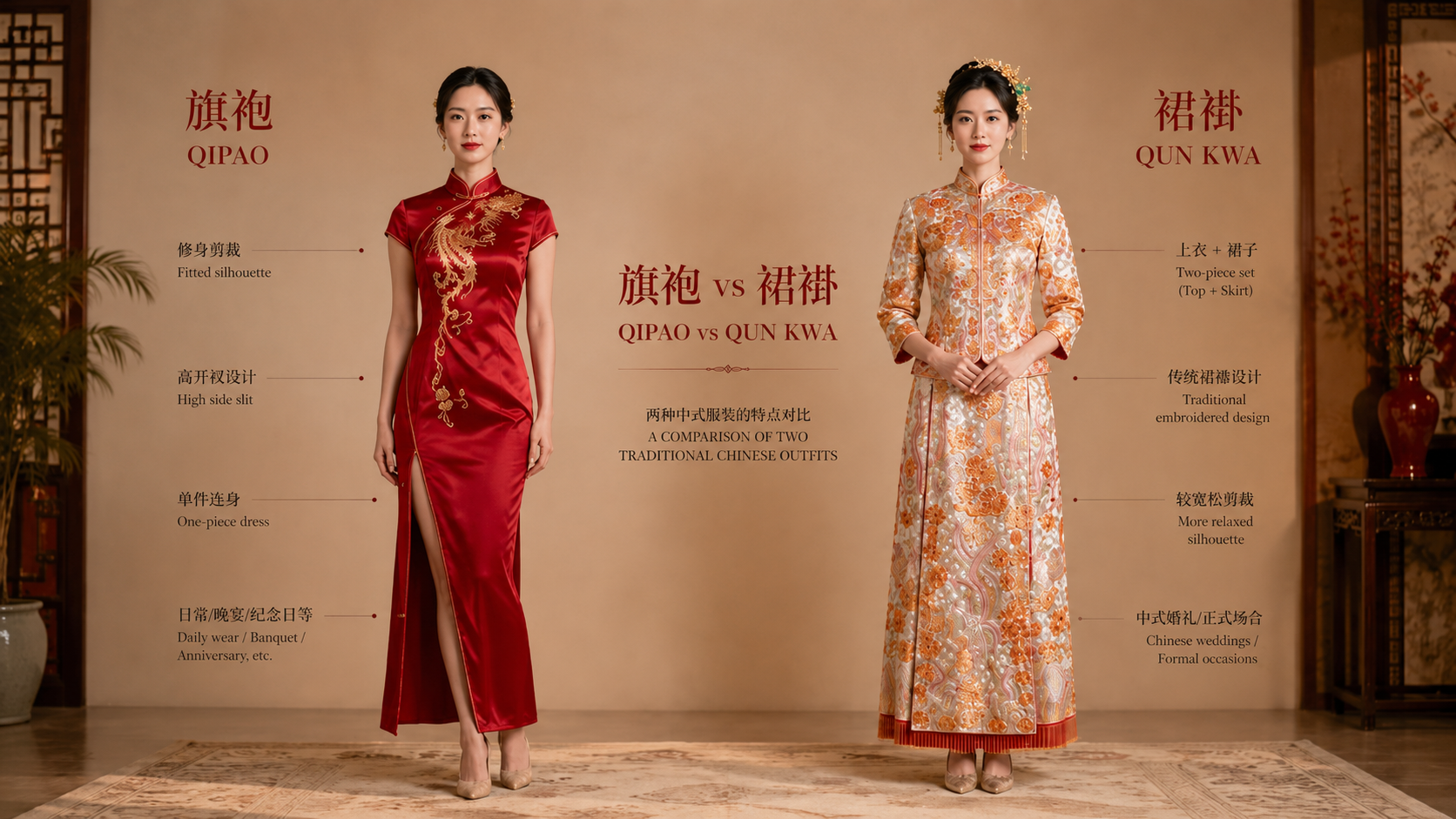
The truth is: a kua and a qipao are not the same thing.
They come from different traditions, create very different silhouettes, and often serve different moments during a Chinese wedding day. Neither is automatically “better.” The right choice depends on your family background, your wedding timeline, your body comfort, your personal style, and how much tradition you want to include.
For modern Chinese American brides, the best answer is often not choosing one over the other. It is understanding what each dress represents, then deciding what feels most meaningful for your wedding.
What Is a Kua?
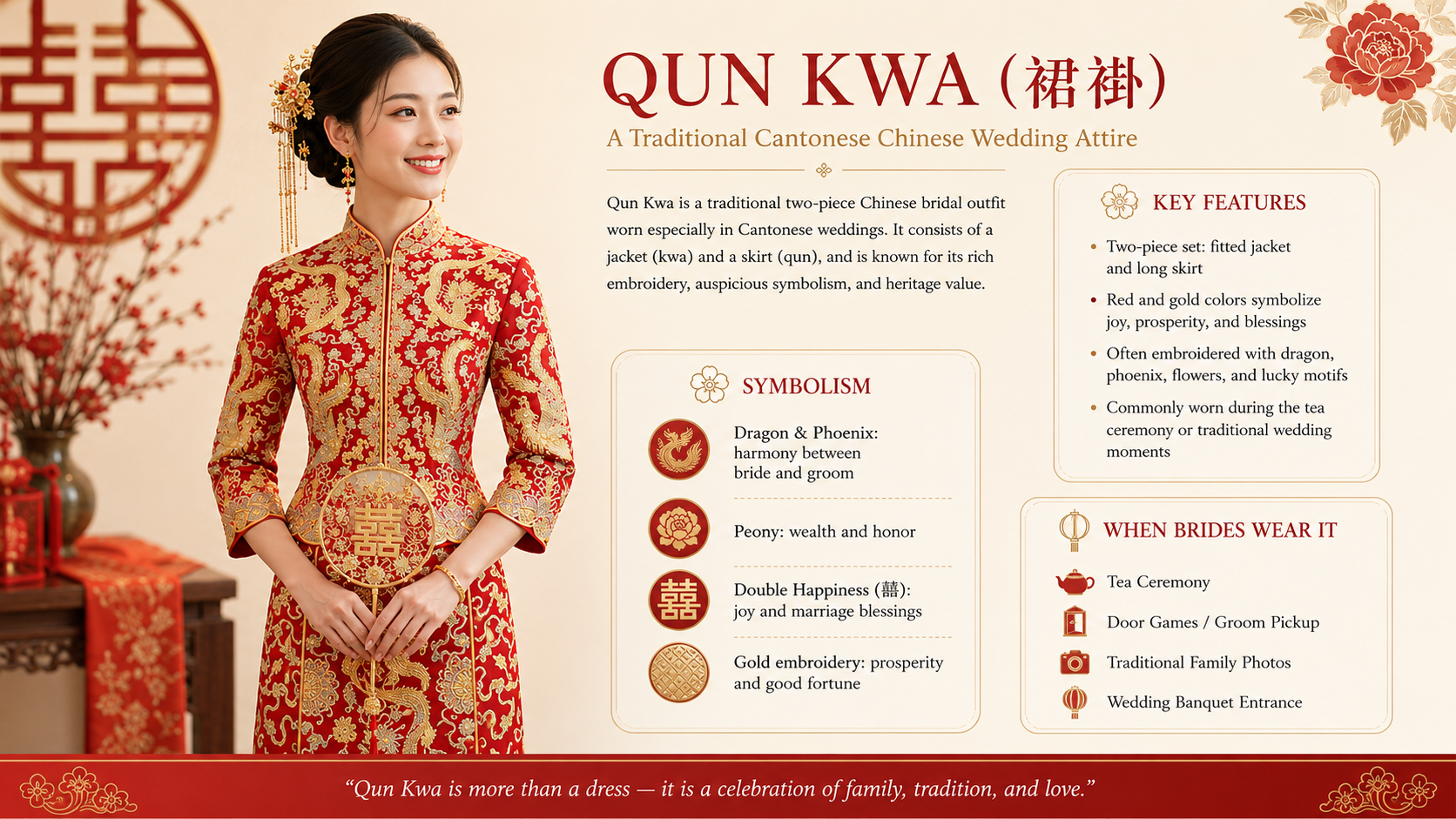
A kua, also called a qun kwa or 褂裙, is a traditional Chinese bridal outfit most closely associated with Cantonese wedding culture.
It is usually made with a structured jacket and skirt, often in bright red with elaborate gold embroidery. Common embroidery details include dragons, phoenixes, peonies, flowers, and other symbols connected to prosperity, joy, harmony, and blessing.
A kua is usually the outfit people picture when they think of a traditional Chinese wedding tea ceremony.
It has a strong ceremonial feeling. It photographs beautifully with gold jewelry, red packets, tea sets, family portraits, and the emotional moments of serving tea to parents and grandparents.
For brides with Cantonese, Hong Kong, or Southern Chinese family roots, a kua often carries a particularly strong emotional connection.
What Is a Qipao?
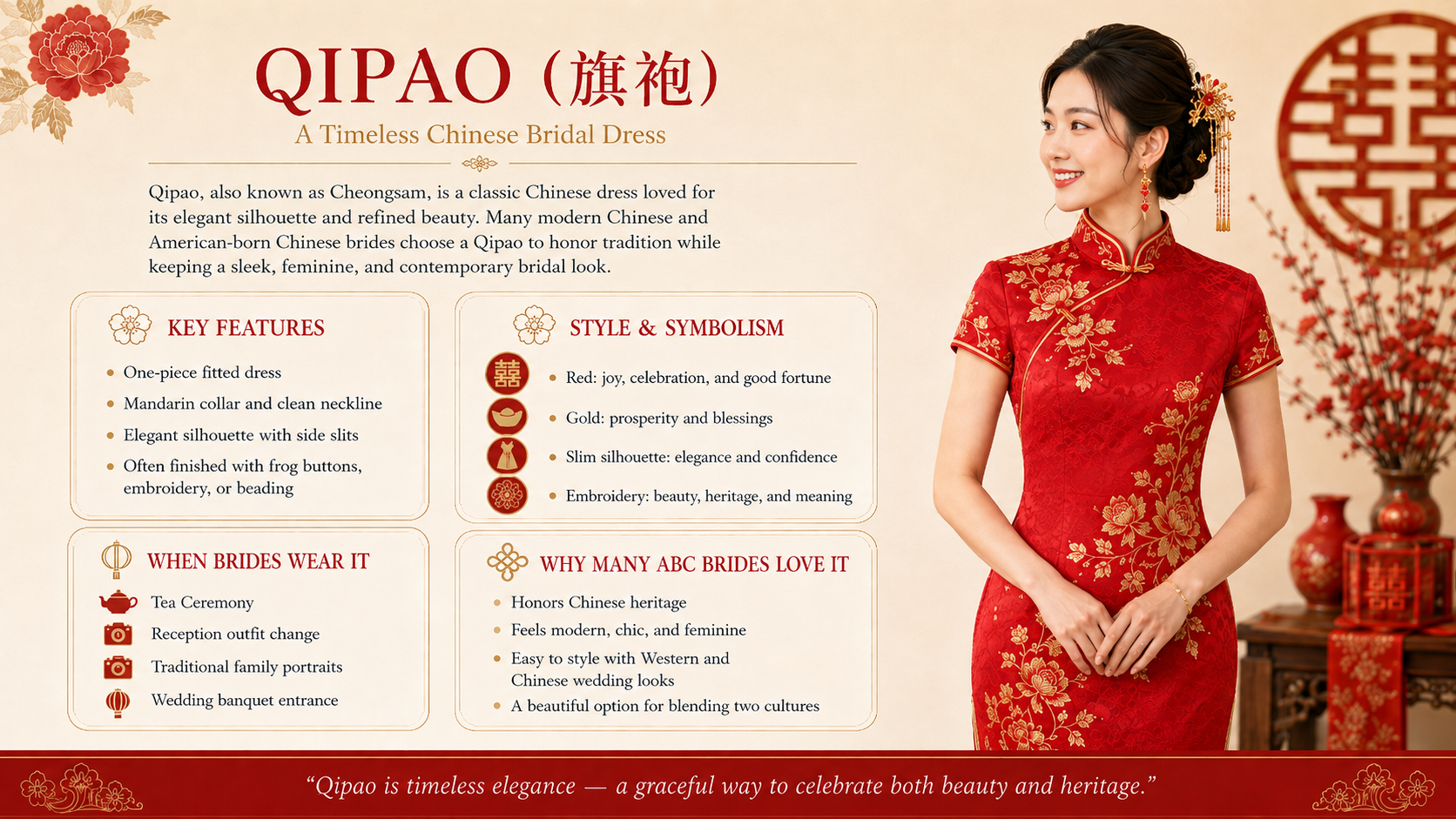
A qipao, also called a cheongsam or 旗袍, is a fitted Chinese dress known for its elegant, body-skimming silhouette.
Compared with a kua, a qipao is usually more minimal, sleek, and fashion-forward. It often has a high neckline, fitted waist, side slit, and traditional frog-button details.
Qipaos can be red, gold, ivory, pink, emerald, blue, black, or almost any color. Some are highly traditional, while others are modern, editorial, and designed more like evening gowns.
For weddings, many brides wear a qipao for:
A reception entrance
Banquet toasting
A second look
Engagement photos
Bridal portraits
A modern tea ceremony
A civil ceremony
A smaller intimate wedding
A qipao often feels less ceremonial than a kua, but it can feel more flexible, contemporary, and easier to move in.
Kua vs. Qipao: The Main Difference
The easiest way to understand the difference is this:
A kua is a traditional Chinese bridal outfit made specifically for major wedding rituals, especially tea ceremonies.
A qipao is a fitted Chinese dress that can be worn for weddings, receptions, portraits, formal events, and modern bridal looks.
Here is how they compare:
FeatureKua / Qun KwaQipao / CheongsamTraditional useChinese wedding rituals and tea ceremoniesFormal Chinese dress for many occasionsSilhouetteJacket and skirt, structured, fullerFitted, slim, body-skimmingCultural associationStrongly connected to Cantonese weddingsOften associated with Shanghai-style fashion and modern Chinese eleganceTypical colorRed and goldMany colors, including red, gold, ivory, and modern shadesEmbroideryUsually detailed and symbolicCan be simple, embroidered, beaded, or modernBest forTea ceremony, family portraits, traditional wedding momentsReception, toasting, portraits, second look, modern ceremonyJewelry pairingGold jewelry, jade, family heirloomsMore flexible: pearls, gold, jade, diamonds, modern accessoriesOverall feelingTraditional, ceremonial, rich, meaningfulElegant, sleek, feminine, modern
Should You Wear a Kua for Your Tea Ceremony?
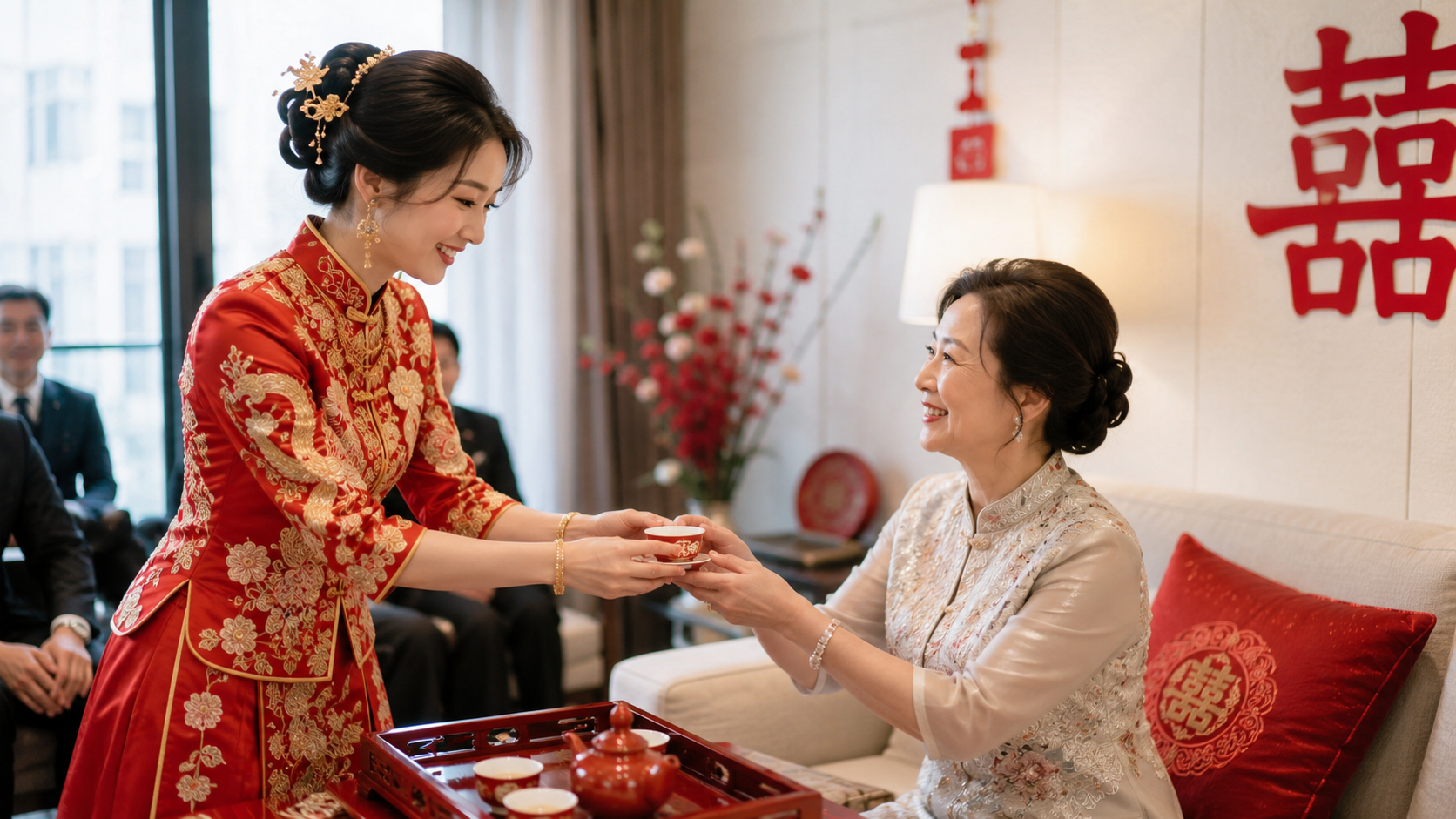
For most Chinese American brides, the answer is: if you want the tea ceremony to feel traditional and visually meaningful, a kua is usually the strongest choice.
A kua works especially well when you are including:
A Chinese tea ceremony with parents and grandparents
Door games or bride pickup traditions
Gold jewelry from family
A red-and-gold wedding color palette
A Cantonese or Hong Kong family wedding
Family photos with older relatives
A formal Chinese wedding banquet later in the day
The red-and-gold combination instantly creates a sense of occasion. It also gives the tea ceremony its own visual identity, separate from your Western ceremony and white gown.
A kua tells the story clearly in photographs: this is the Chinese wedding portion of the day. This is the moment where family traditions, blessings, and generations come together.
When a Qipao May Be the Better Choice
A qipao may be the better choice if your wedding feels more modern, minimal, fashion-focused, or less formal.
It can be especially practical if:
You are having one combined tea ceremony at a hotel or venue
You want to move easily between ceremonies and portraits
You prefer a lighter, more fitted silhouette
You do not want a heavily embroidered outfit
You are having a small family tea ceremony
You want to wear something you can use again after the wedding
You are doing a modern city wedding, courthouse ceremony, or editorial bridal shoot
You want a red outfit for the reception but do not want a full kua
A qipao can still feel deeply Chinese and meaningful. It simply creates a different mood.
A kua says heritage, ceremony, and family tradition.
A qipao says elegance, confidence, and modern Chinese femininity.
Neither one is less valid.
Can You Wear Both a Kua and a Qipao?
Yes. In fact, wearing both is often the best option for brides who want tradition without feeling limited.
A common modern Chinese wedding outfit plan looks like this:
Kua for tea ceremony and family portraits
White wedding gown for Western ceremony
Qipao for reception entrance, banquet, or table toasting
This gives each part of the wedding day its own mood.
The kua carries the emotional and cultural weight of the tea ceremony. The white gown supports the Western ceremony. The qipao gives you a polished, comfortable, modern look for the reception.
This setup also photographs beautifully because your wedding album has visual variety without feeling random.
Kua vs. Qipao for Chinese Wedding Photos
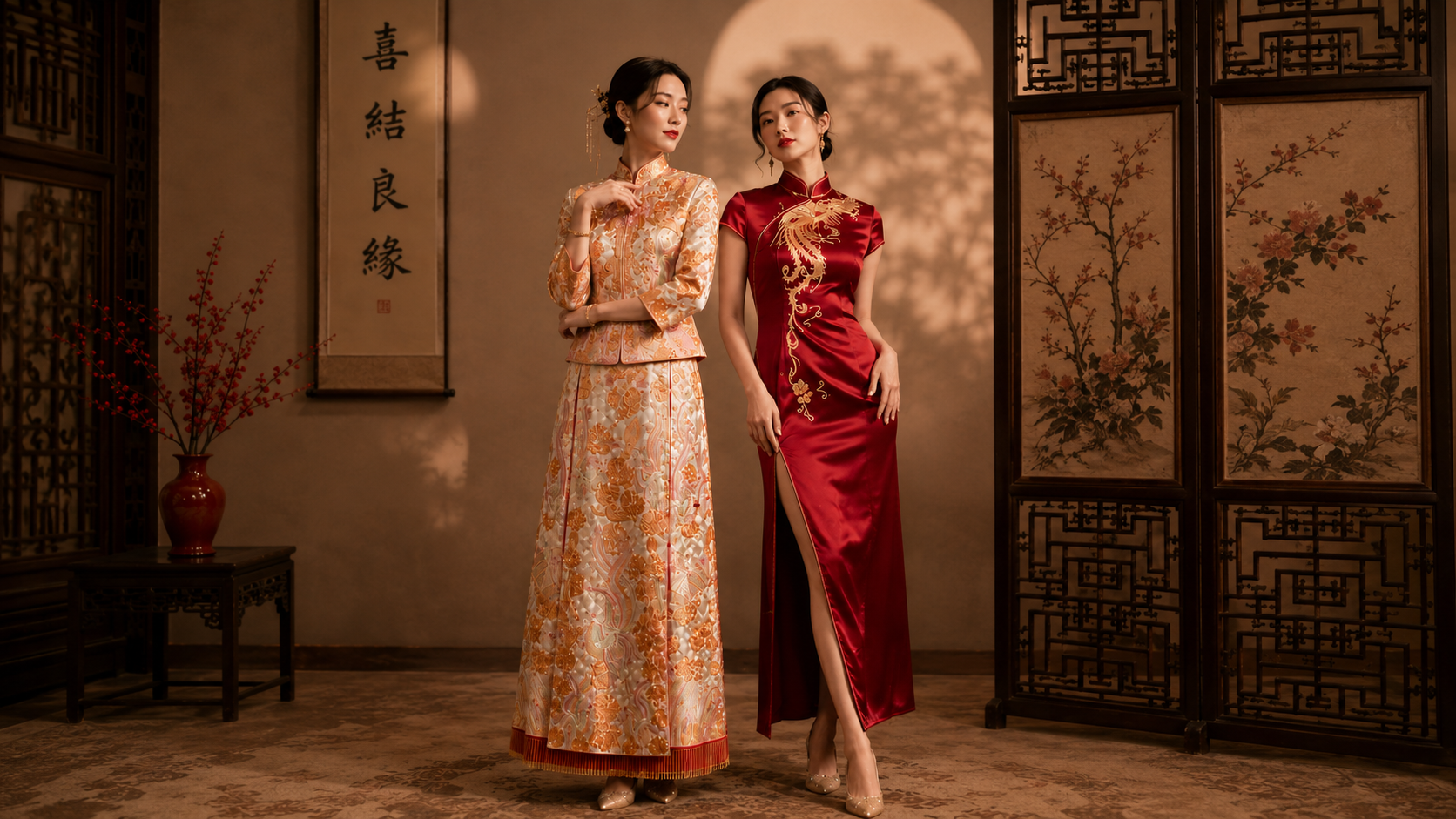
From a photography perspective, the two outfits create very different images.
A kua tends to look strongest in:
Tea ceremony photos
Family portraits
Traditional Chinese interiors
Hotel suites
Red-and-gold decor
Heritage architecture
Formal bridal portraits
Photos with gold jewelry, tea sets, and red envelopes
A qipao tends to look strongest in:
City streets
Modern hotels
Editorial bridal portraits
Restaurants and banquet rooms
Courthouse or city hall weddings
Reception entrances
Evening lighting
Fashion-forward couple photos
The best choice depends on the story you want your wedding photos to tell.
Do you want your Chinese wedding look to feel traditional and ceremonial? A kua will usually deliver that more clearly.
Do you want your Chinese wedding look to feel modern, sleek, and fashion-led? A qipao may fit better.
Which Dress Works Better With Gold Jewelry?
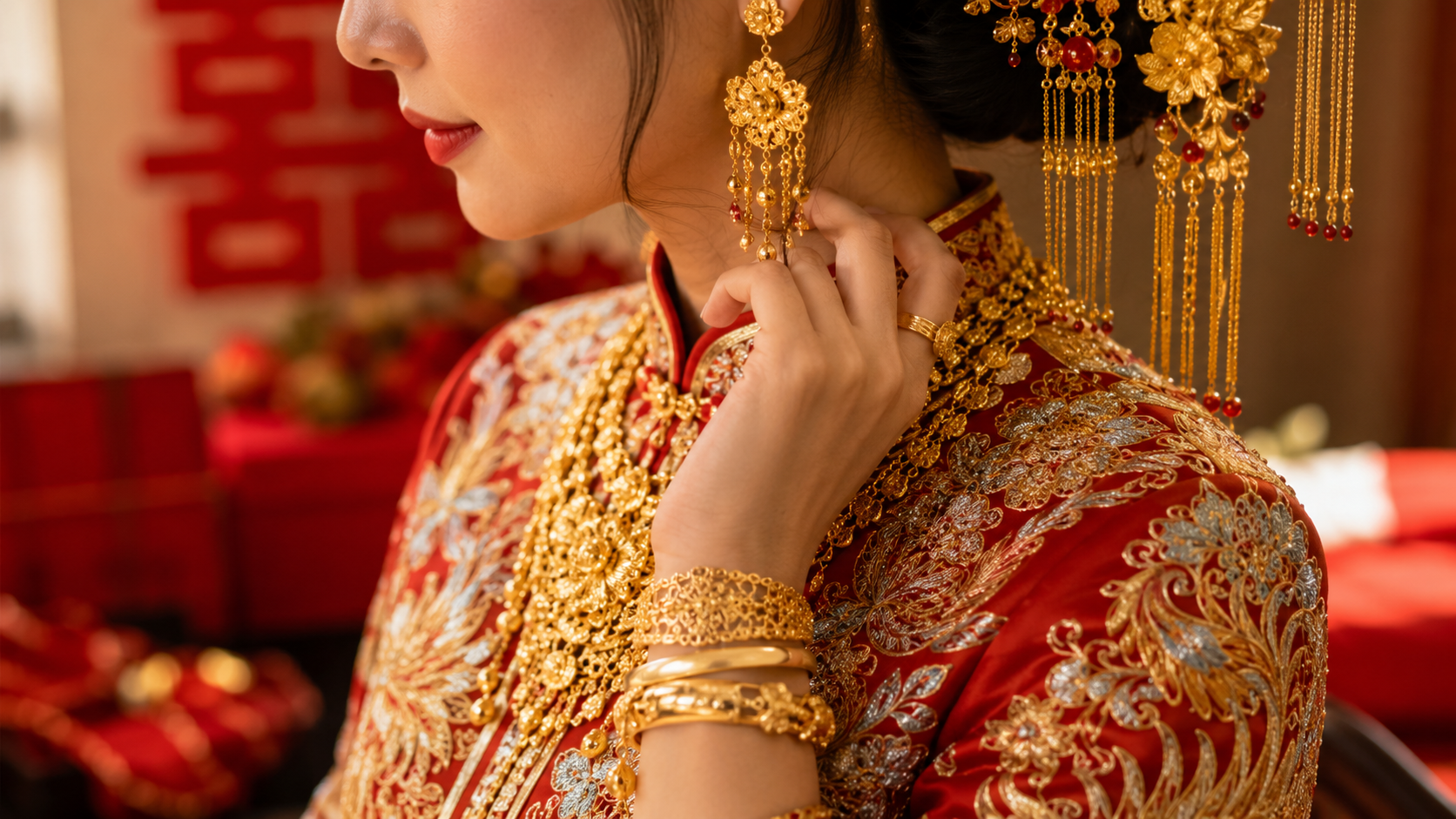
For most Chinese wedding tea ceremonies, a kua works more naturally with gold jewelry.
The red fabric, gold embroidery, and symbolic designs create a strong visual harmony with:
Gold bangles
Gold necklaces
Jade pendants
Family heirlooms
Traditional hair accessories
Dragon and phoenix jewelry
Red envelopes and tea sets
When family members present gold jewelry during the tea ceremony, a kua gives those moments more visual impact.
A qipao can also work with gold jewelry, but the balance needs more thought. A simple, fitted qipao may look best with fewer pieces or more refined jewelry choices.
For example:
A heavily embroidered red qipao can support statement gold jewelry.
A minimalist satin qipao may look better with one necklace, earrings, or jade.
A modern ivory qipao may pair beautifully with pearls, diamonds, or delicate gold.
The goal is not to wear everything at once. The goal is to make the outfit, jewelry, makeup, and hairstyle feel connected.
Kua Makeup vs. Qipao Makeup: Why the Look Should Change
A common mistake is treating every Chinese wedding outfit exactly the same.
A kua and a qipao need different beauty direction because they create different visual weight.
Makeup for a Kua
A kua usually needs a little more structure because the outfit itself is rich, detailed, red, and gold.
A strong kua makeup look may include:
Long-lasting, natural-looking skin
More defined brows and eyes
Soft contour and warm blush
Lash definition that still looks elegant in photos
A lip color that holds up against red and gold
A hairstyle with enough polish to balance the embroidery and jewelry
The goal is not heavy glam. The goal is to make sure your face does not disappear beside the outfit.
Makeup for a Qipao
A qipao usually allows for a softer, more refined, more fashion-forward makeup look.
Depending on the dress color and cut, a qipao look may include:
Glowing but controlled skin
Softer eyes
Cleaner eyeliner
A more modern lip color
Sleek hair or a low bun
A polished updo with fewer hair accessories
A refined red lip for a classic Chinese glamour look
The qipao often shows more of the neck, shoulders, and body line, so hairstyle and posture become especially important.
What Hairstyle Works Best With a Kua?
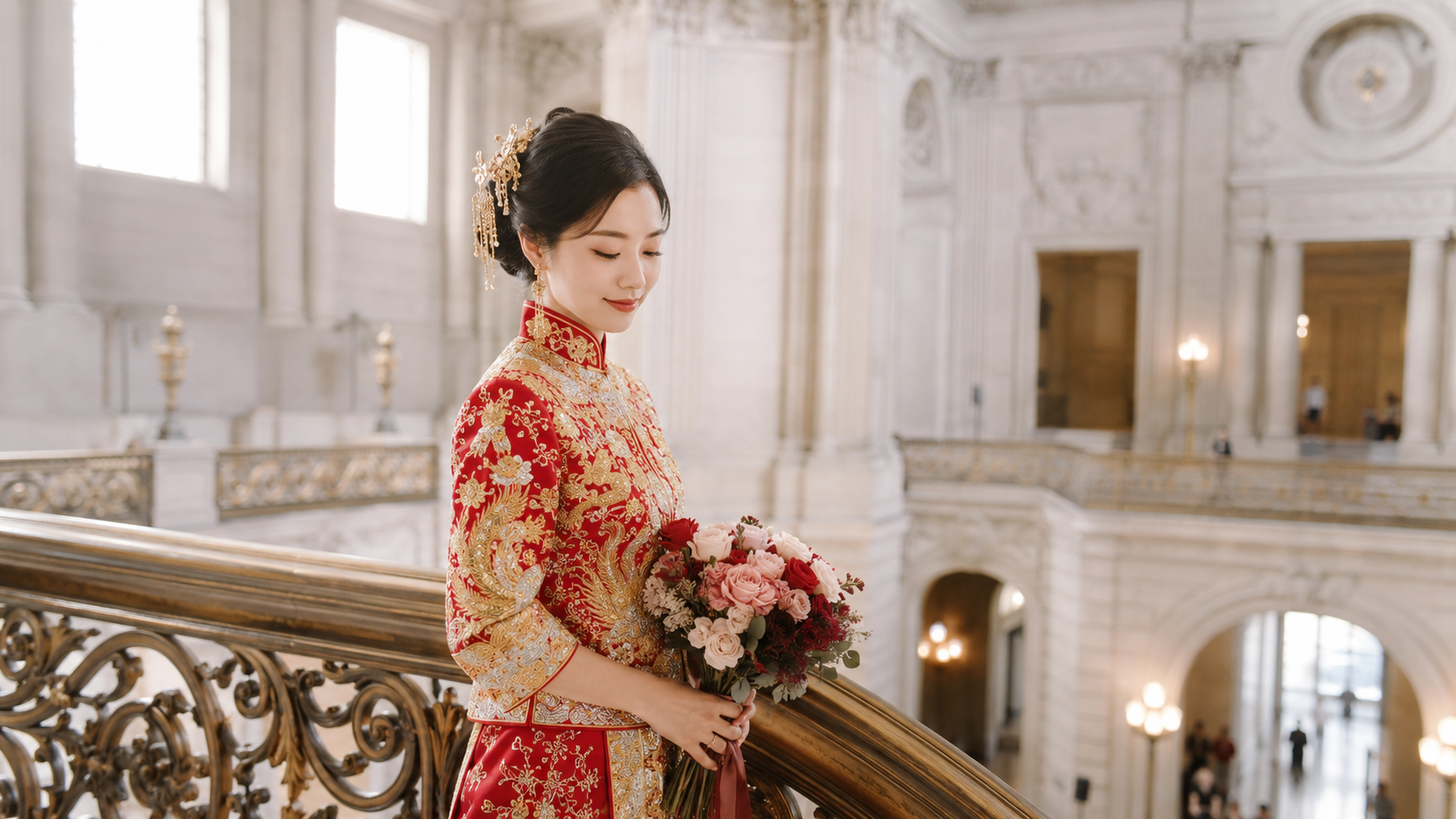
A kua usually works best with an elegant updo or half-up hairstyle that creates room for hair accessories, earrings, and jewelry.
Popular kua hairstyle options include:
Low textured bun
Soft traditional-inspired updo
Half-up hairstyle with gold hairpieces
Polished volume at the crown
Braided updo with subtle accessories
Sleek low bun with statement earrings
The hairstyle should not compete with the kua embroidery. It should frame your face and support the neckline, jewelry, and family-photo moments.
For a tea ceremony, the hairstyle also needs to be secure. You may be bowing, serving tea, hugging relatives, changing jewelry, and moving through a busy room.
A beautiful hairstyle that falls apart halfway through the ceremony is not bridal styling. It is a problem waiting to happen.
What Hairstyle Works Best With a Qipao?
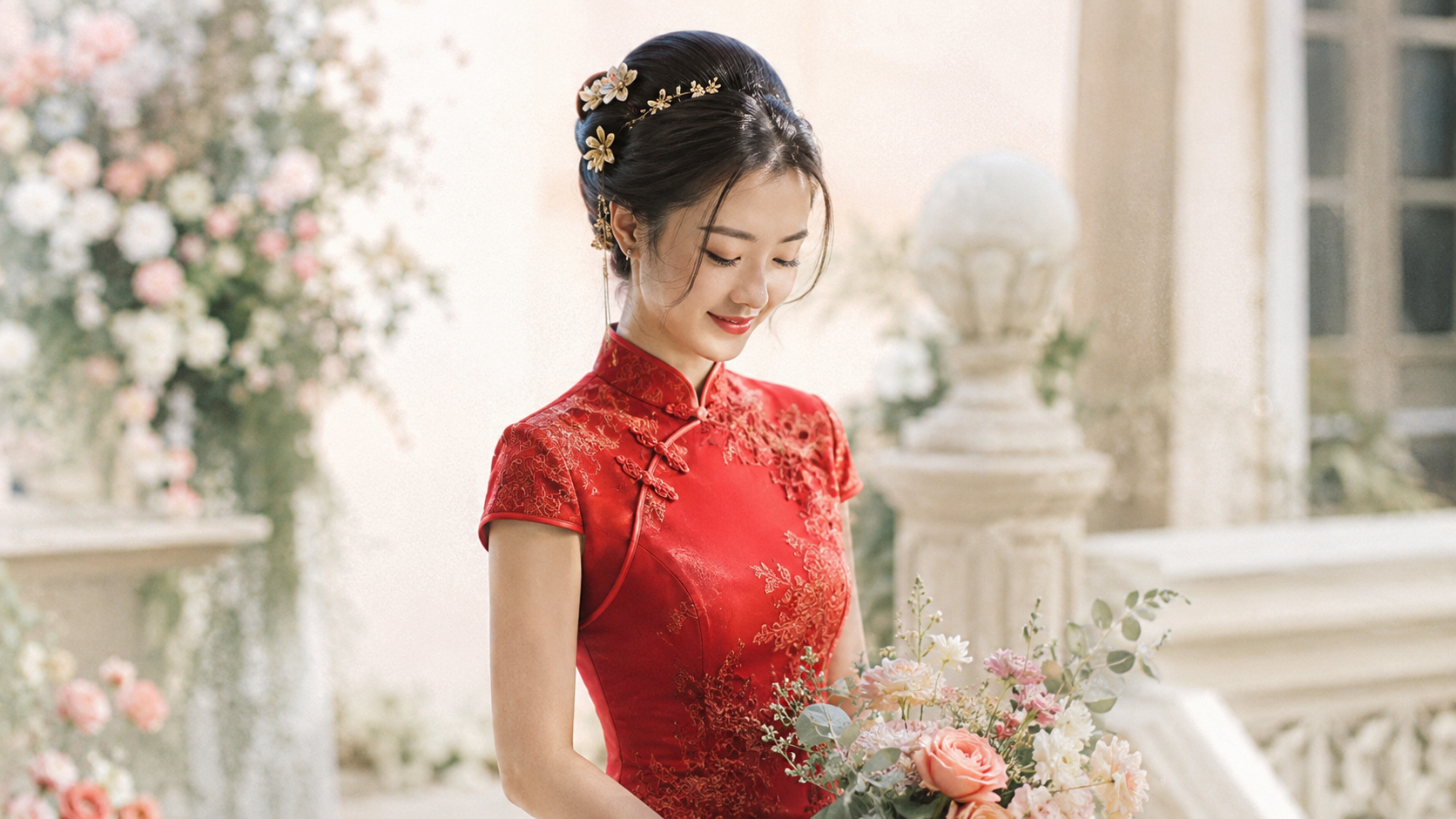
A qipao gives you more flexibility.
Because the dress is often sleek and fitted, the hairstyle can lean more modern and editorial.
Popular qipao hairstyle options include:
Sleek low bun
Hollywood waves
Side-parted soft waves
Vintage-inspired waves
Clean ponytail
Modern chignon
Short hair styled with a statement clip
Sculptural updo for a high-neck qipao
A qipao is also a good outfit for brides who want their hairstyle to feel more fashion-forward than traditional.
How to Choose Between a Kua and a Qipao
Ask yourself these questions:
1. What traditions matter most to my family?
If your parents or grandparents strongly value the tea ceremony, a kua may feel more meaningful and appropriate.
2. What is my wedding-day timeline?
If you have a full tea ceremony, a Western ceremony, and a banquet, wearing multiple outfits may make sense.
If you have a smaller wedding with limited time, one well-chosen qipao or kua may be enough.
3. What kind of photos do I want?
A kua creates a richer traditional story.
A qipao creates a cleaner, more modern fashion story.
4. What silhouette makes me feel most confident?
Do not choose an outfit only because it is traditional or expected.
You should feel comfortable sitting, walking, hugging family, serving tea, and being photographed.
5. Do I want to wear my Chinese wedding outfit again?
A qipao is often easier to rewear for anniversaries, Lunar New Year, formal dinners, and future family events.
A kua may be more ceremonial and less practical for everyday rewearing, but it can become a meaningful heirloom piece.
The Best Choice for a Modern Chinese American Bride
There is no universal answer.
For some brides, the most meaningful choice is a full traditional kua for tea ceremony, a white gown for vows, and a qipao for the reception.
For others, a modern qipao is the perfect balance between culture and personal style.
For some brides, the most important thing is not the outfit itself. It is the opportunity to sit in front of parents and grandparents, serve tea, receive blessings, and create photographs that carry family history forward.
Your Chinese wedding outfit should not feel like a costume.
It should feel like you.
It should reflect your heritage, your family, your personal style, and the kind of wedding memories you want to carry into the next chapter of your life.
At Sarah Image, we help Bay Area Chinese and Asian brides create bridal hair and makeup that works with the full wedding day—not just one dress. From kua tea ceremonies and gold jewelry to qipao reception looks and white-gown ceremonies, the goal is natural, elegant, long-lasting beauty that feels polished in person and camera-ready in every photograph.
Planning a Chinese tea ceremony, kua look, or qipao reception outfit in the Bay Area? Explore Sarah Image’s Chinese bridal makeup experience for customized wedding-day hair and makeup planning.
Frequently Asked Questions About Kua and Qipao
Is a kua more traditional than a qipao?
For Chinese weddings, especially Cantonese tea ceremonies, yes. A kua is more directly tied to traditional bridal wedding rituals. A qipao is a formal Chinese dress that can be worn for weddings and many other occasions.
Can I wear a qipao for my Chinese tea ceremony?
Yes. Many modern brides do. A qipao is a good option for a smaller, more modern, or less formal tea ceremony.
Can I wear a kua for my reception?
You can, but many brides prefer to change into a qipao or another reception dress because it can be easier to move, sit, eat, greet guests, and toast tables.
Should my kua makeup be more dramatic?
Not necessarily dramatic, but it should have enough definition to balance the red, gold, embroidery, jewelry, and photography. Natural bridal makeup can still be structured and long-lasting.
What color qipao should I wear for my wedding?
Red and gold are classic choices, but modern Chinese brides also wear ivory, champagne, blush, burgundy, emerald, black, or custom colors. Choose a color that fits your wedding palette, skin tone, and overall style.
Is it okay to mix Chinese and Western wedding outfits?
Yes. This is one of the most common choices for Chinese American couples. A kua or qipao can be part of the tea ceremony, while a white gown can be worn for the Western ceremony and reception.
