
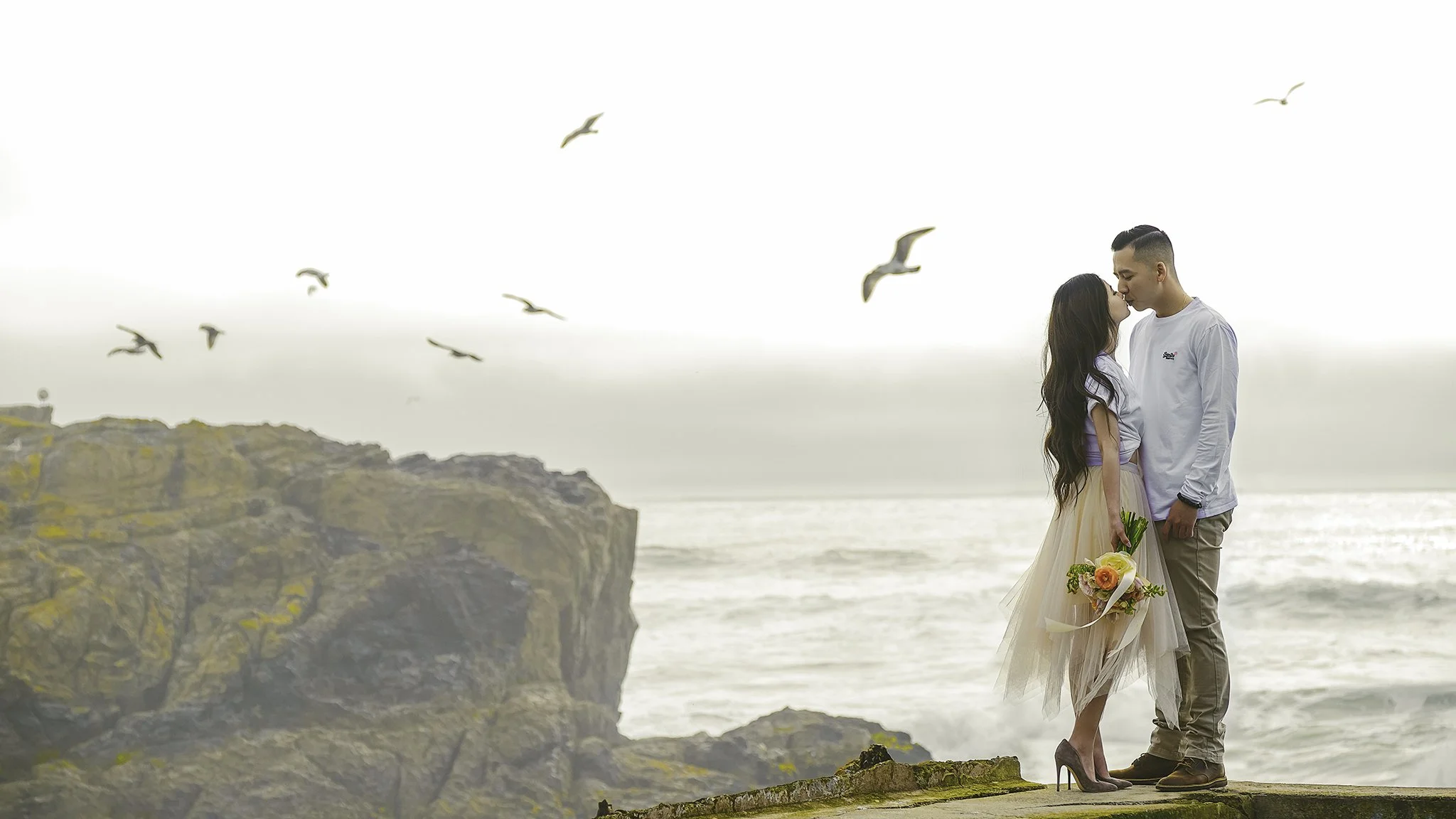
Your first steps to planning a meaningful, beautiful wedding in the San Francisco Bay Area — including wedding budgets, venues, Chinese traditions, and bridal beauty.
Congratulations on your engagement!
Whether your proposal happened during the holidays, on a weekend getaway, or in a quiet moment together, getting engaged is the beginning of an exciting new chapter.
But after the celebrations, photos, and congratulations, a familiar question often follows:
“We're engaged! What do we actually do next?”
If you're planning a wedding in the San Francisco Bay Area, you may already be thinking about your budget, guest list, venue, wedding vendors, and how far in advance everything needs to be booked.
For Chinese, Hong Kong, Taiwanese, and Asian-American couples, there may be additional considerations: a traditional Chinese tea ceremony, family expectations, a Chinese bridal kua, multiple outfits, or blending Eastern and Western wedding traditions.
It can feel like a lot to organize.
The good news? You don't need to make every decision immediately.
The most useful first step is understanding which decisions affect everything else.
Here's a practical guide to help you begin planning your Bay Area wedding with confidence.
1. Enjoy Your Engagement Before You Start Planning
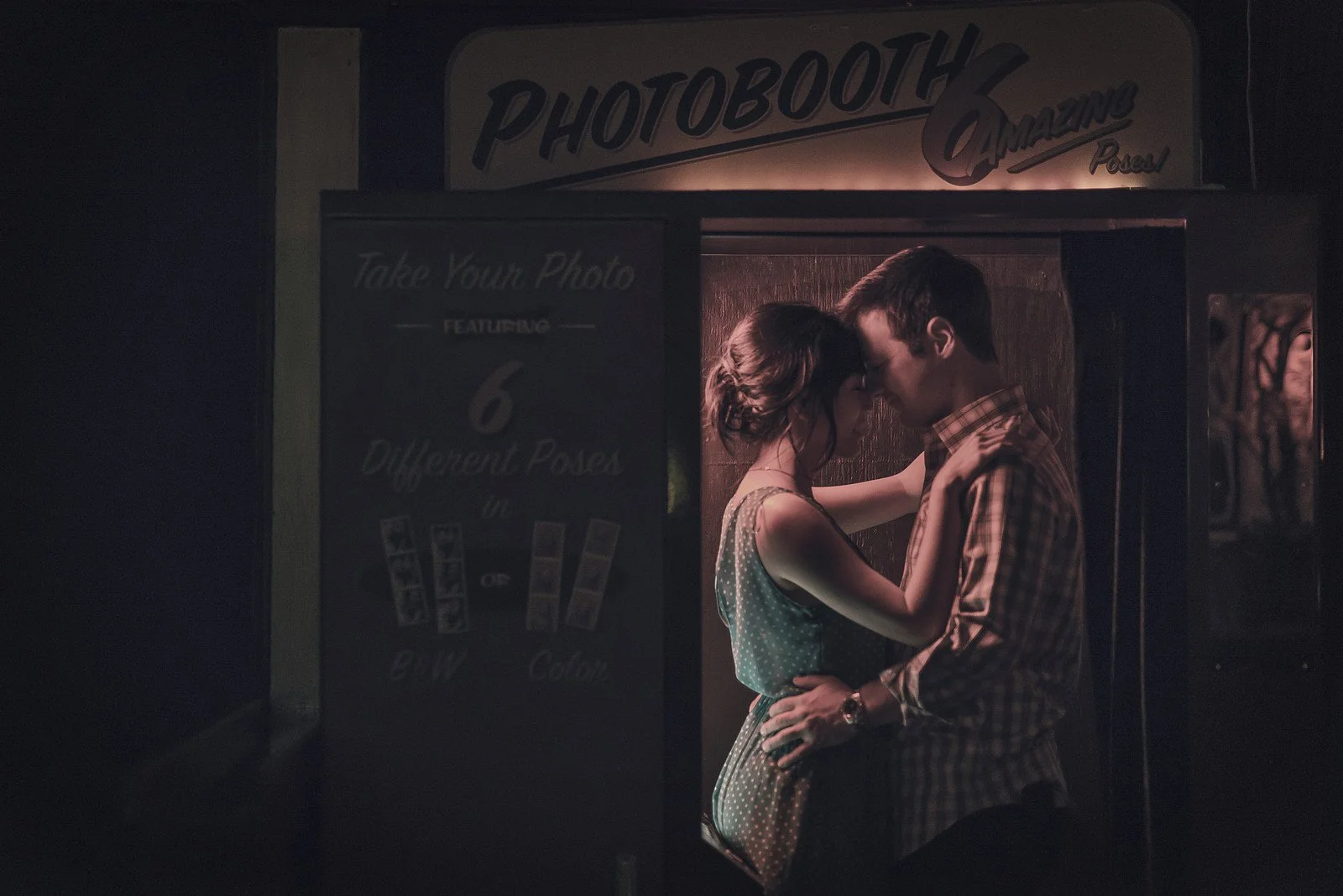
Before jumping into spreadsheets and vendor inquiries, give yourselves a little time to celebrate.
Share the news with loved ones, take engagement photos if you'd like, and talk about what marriage and your wedding day mean to both of you.
You don't need a wedding date, venue, or perfectly organized Pinterest board to begin these conversations.
Start by asking each other:
Do we want an intimate celebration or a larger wedding?
What matters most to us: family, meaningful traditions, beautiful photography, food, or the overall experience?
Do we imagine a modern Western ceremony, a traditional Chinese wedding, or a combination?
Are there family traditions we want to include?
What do we want to remember most about our wedding day?
Your answers will become the foundation of your planning decisions.
A thoughtful wedding begins with understanding what matters to you, not with booking everything at once.
2. Discuss Your Wedding Budget Early
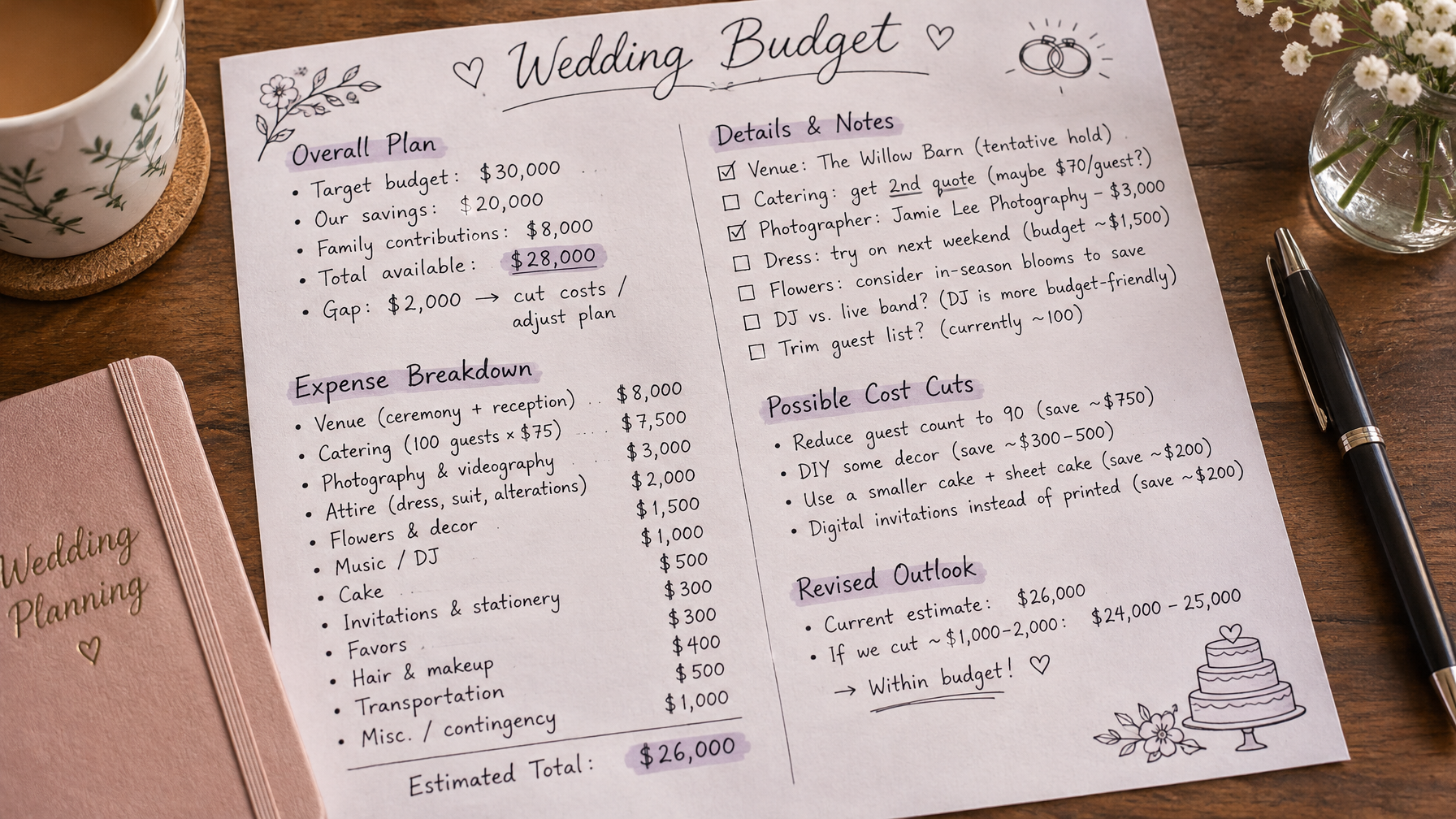
One of the first practical steps after getting engaged is understanding what you feel comfortable spending.
Bay Area weddings can vary significantly in cost depending on your venue, guest count, season, catering, and the number of wedding events you're planning.
A celebration in San Francisco may have very different requirements from a wedding in Napa Valley, San Jose, or the East Bay.
Before contacting vendors, discuss your overall budget and which experiences deserve the greatest investment.
Consider these major categories:
Venue and catering
Wedding planning or coordination
Photography and videography
Bridal hair and makeup
Wedding attire and accessories
Flowers and decorations
Entertainment
Transportation
Chinese tea ceremony arrangements
Additional wedding events or outfit changes
If your family is contributing financially, have an open conversation about whether their contribution comes with particular cultural expectations.
For example, some Chinese families may place special importance on the tea ceremony, banquet, or honoring relatives.
Understanding these expectations early can help avoid difficult changes later.
Bridal beauty planning tip: If you will be wearing a Chinese kua for a tea ceremony and a Western wedding gown for your ceremony, remember to budget for any hairstyle changes, makeup adjustments, or on-site touch-up services.
These are worth discussing before comparing bridal makeup packages.
3. Create Your Guest List Before Choosing a Venue
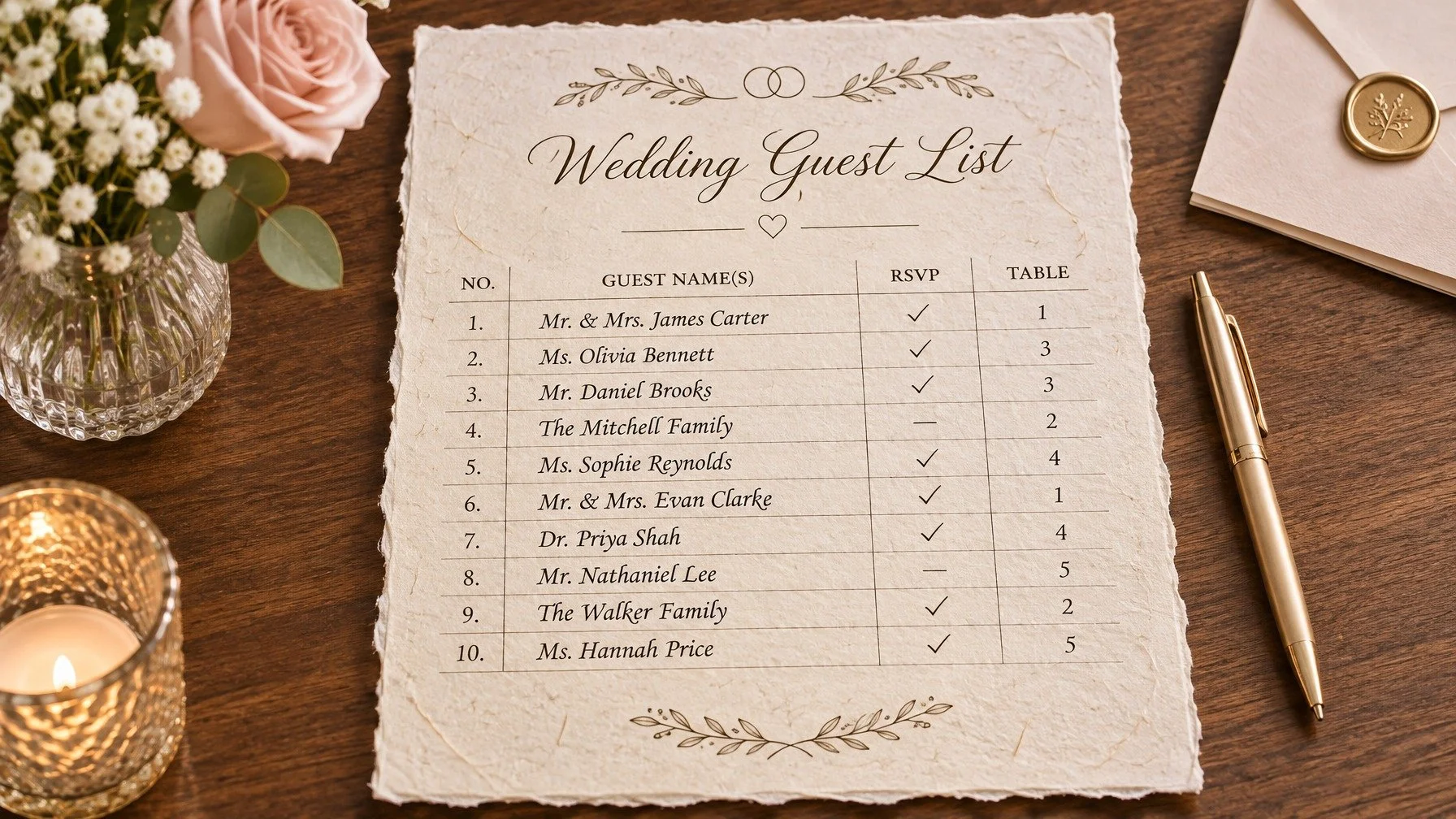
Your guest count influences nearly every major wedding decision.
A wedding with 40 guests requires a different venue, budget, and timeline from a wedding with 200 guests.
Begin by creating an estimated guest list together.
Include immediate family, extended relatives, close friends, and anyone your families hope to invite.
For Chinese and Asian-American couples, this step may involve discussions with both sets of parents, especially when extended family members or overseas relatives are involved.
Your first guest list does not need to be final.
Its purpose is to give you a realistic starting point for venue research and budgeting.
Questions to consider:
Will relatives be traveling from Hong Kong, Taiwan, mainland China, or other countries?
Will you have a separate Chinese wedding banquet?
Are your tea ceremony guests the same as your ceremony and reception guests?
Will some family members attend only certain events?
Once you understand your approximate guest count, choosing the right venue becomes much easier.
4. Decide Whether You Want a Chinese Tea Ceremony
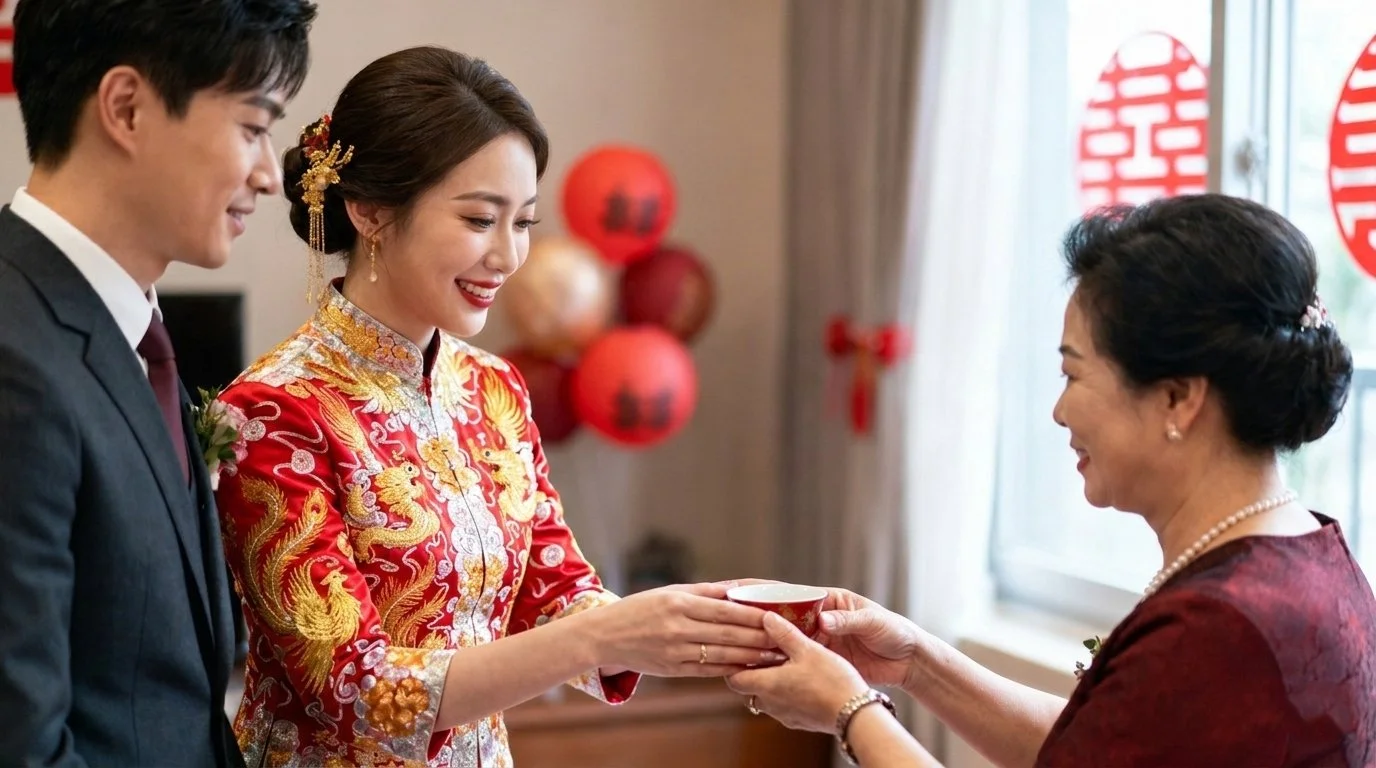
For many modern Asian couples in the Bay Area, wedding planning involves more than one ceremony.
You might choose a traditional Chinese tea ceremony, a Western wedding ceremony, a church wedding, or a combination of celebrations.
A Chinese tea ceremony is a meaningful tradition in which the couple serves tea to parents and elders, expressing respect, gratitude, and the joining of families.
Depending on family customs, the bride may wear a traditional Chinese kua (裙褂), a qipao, or another outfit chosen for the occasion.
You may also need to consider traditions such as fetching the bride (接新娘), door games, and family blessings.
Not every Chinese wedding follows the same customs, and not every couple chooses to include all of them.
The most important thing is to discuss what these traditions mean to you and your families.
Should the Chinese tea ceremony happen on the same day as the Western wedding?
It can, but your schedule needs careful planning.
A tea ceremony before your Western ceremony may require additional preparation time, travel between locations, and a change from your kua into a wedding gown.
Some couples choose separate days to create a more relaxed experience.
There is no single arrangement that works for every family.
Why this matters for bridal hair and makeup
Your Chinese tea ceremony look may need to complement rich red and gold fabrics, traditional jewelry, and a different neckline or hairstyle.
Your Western ceremony look may have a softer, more minimalist aesthetic.
While some brides prefer one versatile makeup look throughout the day, others choose subtle refinements or a complete hairstyle change.
Planning these transitions early helps your bridal makeup artist understand your priorities and make recommendations based on your schedule.
Related reading: Explore the Chinese Wedding Guide on SarahImage.com to learn more about Chinese wedding traditions and tea ceremony planning.
5. Choose Your Wedding Date and Venue

Once you have a general budget, estimated guest count, and understanding of your wedding traditions, you can begin exploring venues.
The San Francisco Bay Area offers a variety of wedding settings, from San Francisco City Hall and waterfront venues to Napa Valley vineyards, Peninsula estates, and East Bay celebrations.
When comparing venues, consider more than appearance.
Think about:
Guest capacity and accessibility
Indoor versus outdoor arrangements
Seasonal weather and lighting
Getting-ready rooms
Travel time between locations
Space for a Chinese tea ceremony
Photography opportunities
Vendor access and scheduling requirements
If your family follows the tradition of choosing an auspicious wedding date (擇日), discuss that early before signing a venue agreement.
For couples planning both a Chinese tea ceremony and Western ceremony, location and travel time are especially important.
A beautiful venue is only one part of creating a comfortable wedding-day experience.
The best schedule leaves enough time to enjoy the moments you're planning so carefully.
6. Know Which Wedding Vendors to Book First
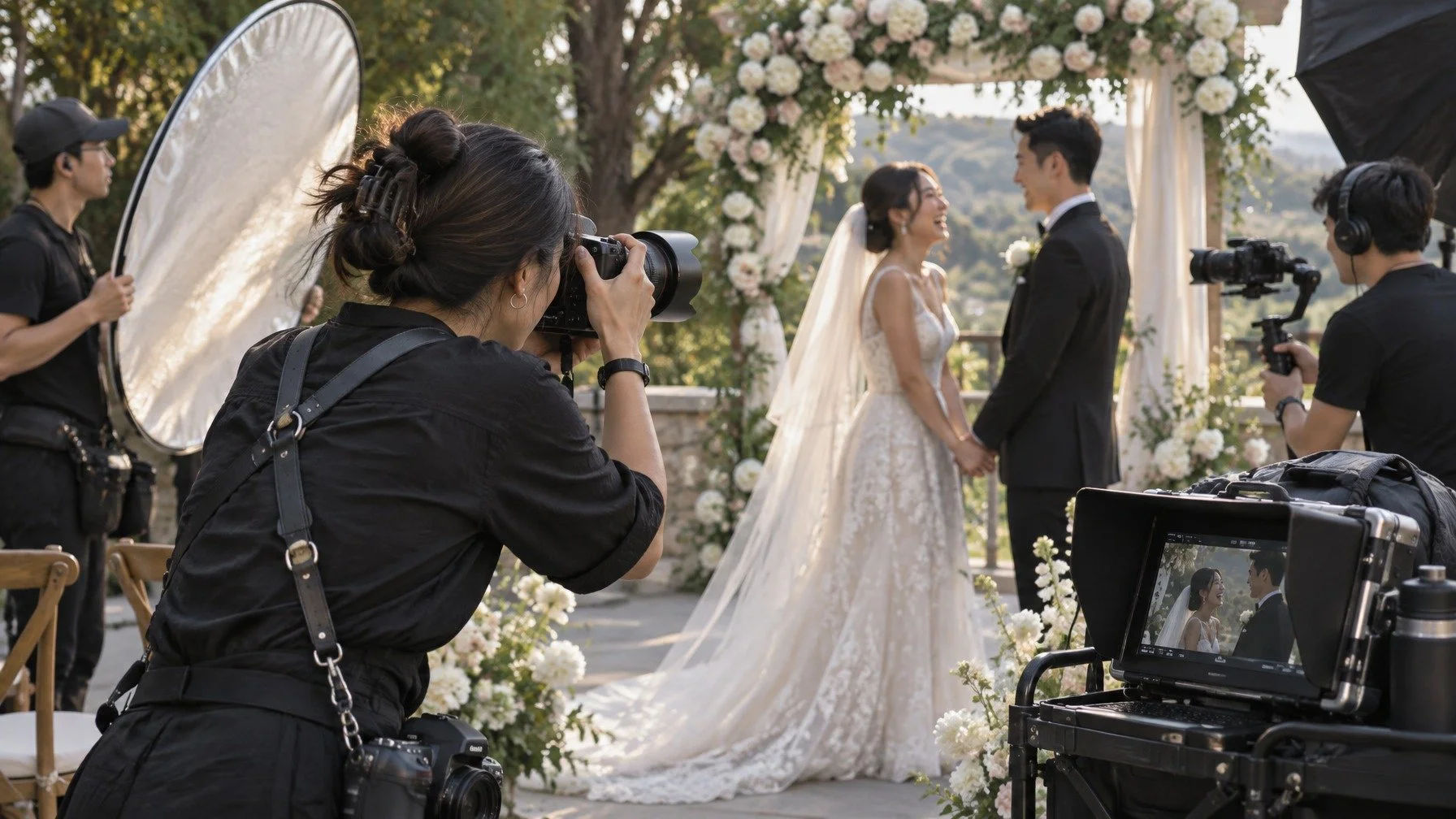
One common question from newly engaged couples is:
“Which wedding vendors should we book first?”
Start with the professionals whose availability affects the rest of your plans.
For many Bay Area weddings, the venue and wedding planner or coordinator are early priorities. Photographers and other date-specific vendors may also need to be secured well in advance.
Bridal hair and makeup belongs on that list, particularly if you want an experienced artist for a popular wedding date or a celebration requiring multiple looks.
A practical wedding vendor booking order
Establish your budget, guest count, and preferred wedding dates.
Research and secure your wedding venue.
Book a wedding planner or coordinator if you need one.
Research and inquire with your preferred photographer, videographer, and bridal hair and makeup artist.
Arrange other vendors according to your wedding requirements, including catering, florals, entertainment, attire, and cultural services.
This is a flexible sequence, not a rule. If a particular artist or photographer is essential to you, check their availability while exploring wedding dates.
When should you book your bridal makeup artist?
For weddings with a fixed date, particularly during busy wedding seasons, it is sensible to inquire around 9–12 months ahead when possible.
That is a planning guideline, not a universal requirement. Some artists book much earlier, while others may have shorter-notice availability.
If you're planning a Chinese tea ceremony, multiple bridal looks, or a large bridal party, contacting your makeup artist early allows more time to discuss the service requirements.
When you inquire, provide:
Wedding date
Getting-ready location
Ceremony locations and approximate start times
Number of people requiring hair and makeup
Whether you will have a Chinese tea ceremony
Whether you anticipate outfit or hairstyle changes
These details help the artist understand your needs before recommending a suitable service.
7. Start Thinking About Your Bridal Beauty Earlier Than You Expect
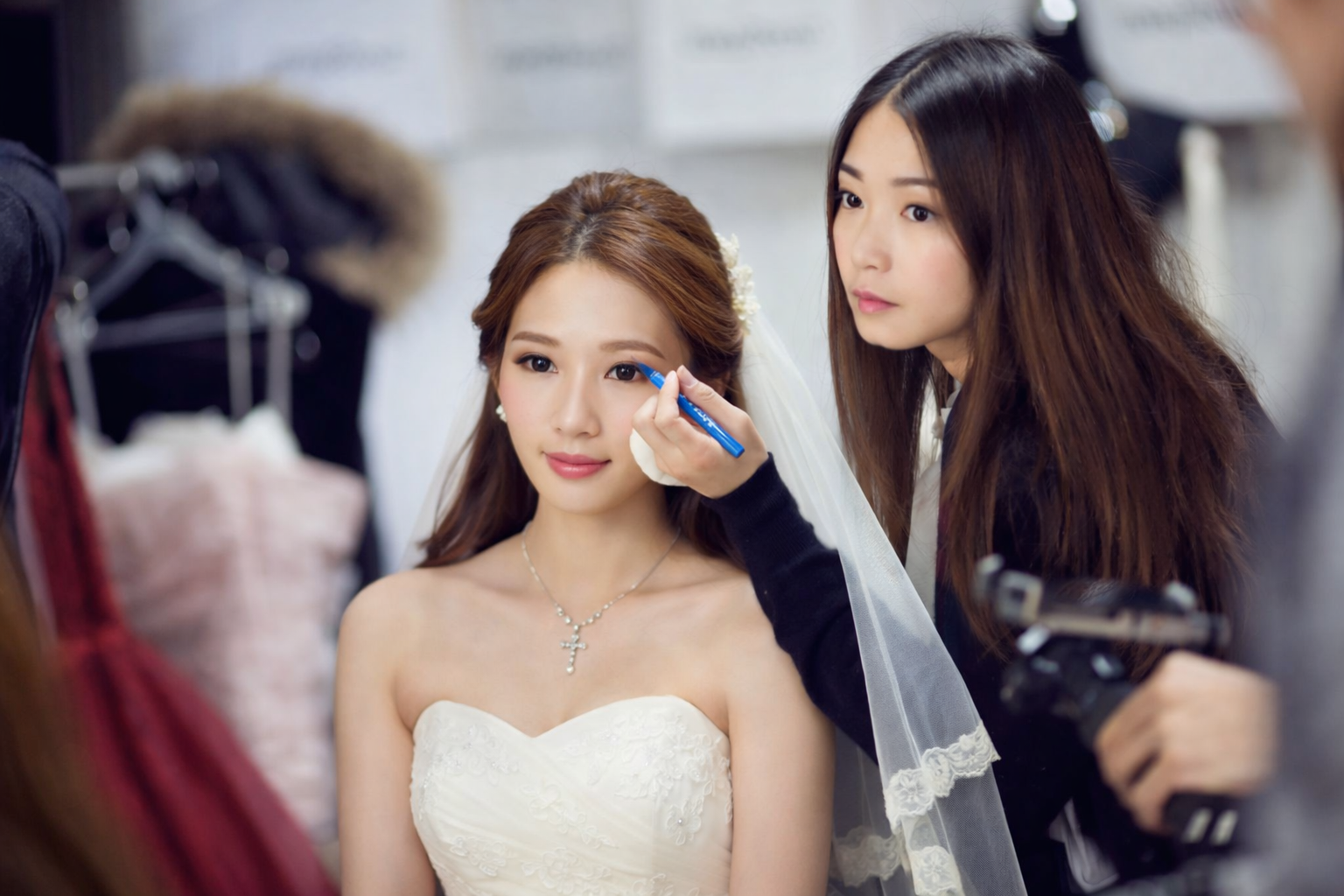
Bridal makeup is not simply about choosing a lipstick shade or recreating a photograph from Pinterest.
Your wedding makeup needs to look beautiful in person, complement your features, photograph well, and remain comfortable throughout a potentially long day.
For Asian brides, that may mean considering eye shape, skin undertones, facial structure, hairstyle, and the balance between natural beauty and camera-ready definition.
A makeup look that appears subtle in photographs may require careful structure and technique to remain visible under different lighting conditions.
What if I want natural bridal makeup?
Natural bridal makeup does not have to mean minimal effort or barely visible makeup.
An elegant, natural look can still include thoughtful complexion work, soft eye definition, balanced color, and long-lasting products selected for your skin.
The goal is to feel recognizable, polished, and confident.
What if I'm wearing both a Chinese kua and a Western wedding gown?
Your makeup and hairstyle should complement both outfits.
Sometimes a single carefully planned look works beautifully with each. Other times, a hairstyle adjustment, change in lip color, or additional refinement creates a better transition.
This is one reason bridal beauty planning should consider the entire wedding timeline rather than focusing only on the ceremony.
Should I book a bridal makeup trial?
A bridal makeup trial or preview can help you explore your preferences, understand how a particular look feels, and discuss options before the wedding.
Ask your artist how trials are scheduled, what is included, and whether they occur before or after the wedding booking.
Every artist's booking policy may be different.
Sarah's perspective: Bridal beauty decisions are easier when the artist understands the bride's outfits, ceremonies, preferences, and photography environment—not just a collection of inspiration photographs.
8. Build a Realistic Wedding-Day Timeline
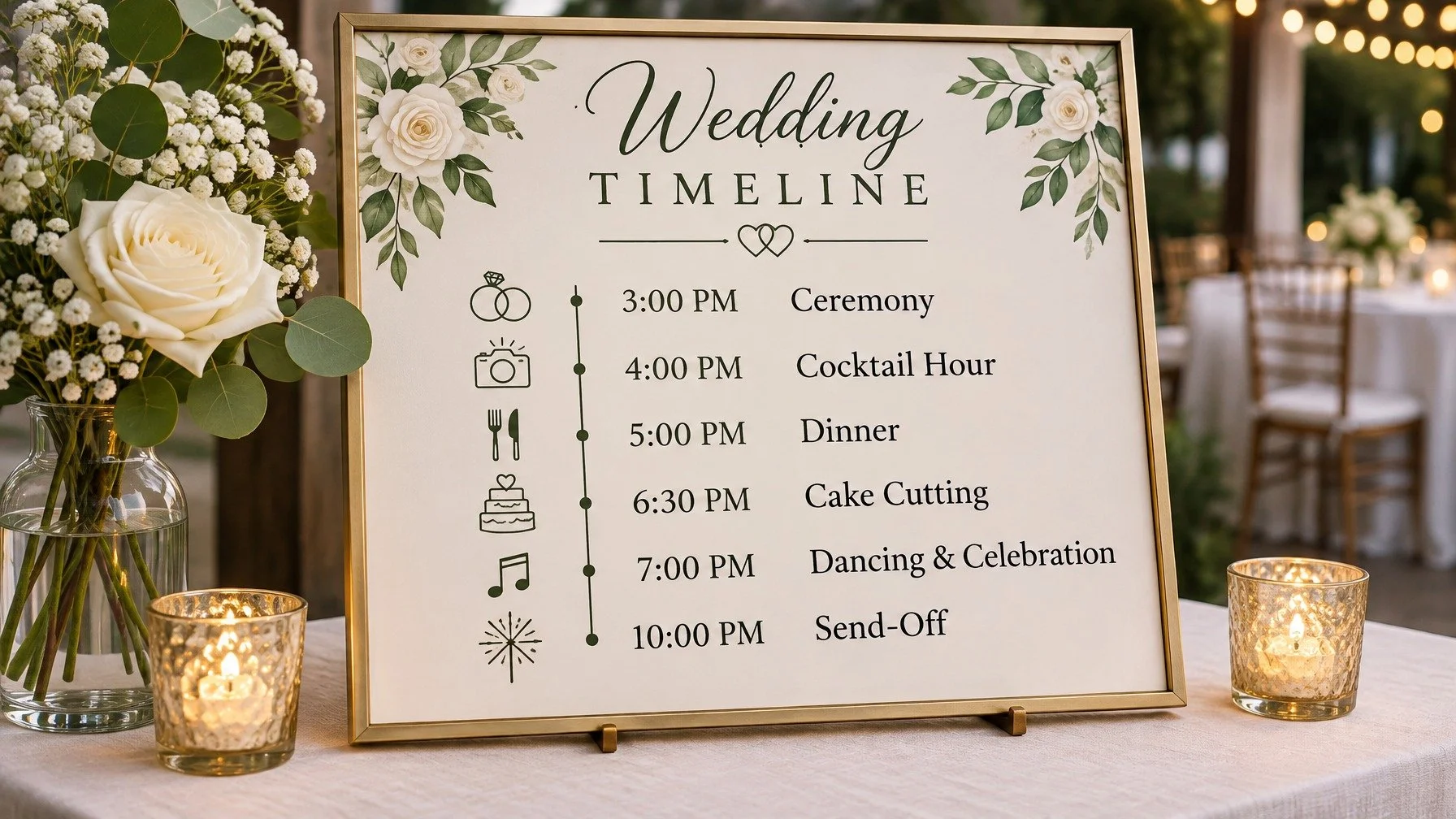
A wedding day often begins earlier than couples anticipate.
Hair and makeup preparation, getting dressed, family portraits, the tea ceremony, transportation, and the Western ceremony may all need to happen before the reception begins.
For Chinese weddings, the schedule can become even more complex when door games, fetching the bride, multiple tea-serving sessions, and outfit changes are included.
A good timeline should allow enough time for:
Bridal hair and makeup
Hair and makeup for family members or attendants
Getting dressed and accessories
Chinese tea ceremony
Family portraits
Transportation between venues
Changing outfits and hairstyles
Western ceremony preparation
Final touch-ups
Your wedding planner, photographer, and bridal beauty team should coordinate on the timing.
For example, if your tea ceremony begins early in the morning, your hair and makeup preparation may need to start several hours beforehand.
Don't choose your makeup start time without considering everything that follows.
A beautiful bridal look should last through your wedding day—not cause you to rush through it.
9. Choose Wedding Professionals Who Understand Your Vision
When comparing wedding vendors, look beyond pricing and Instagram followers.
Review their actual work, experience, communication style, and how well they understand the kind of wedding you're planning.
For bridal hair and makeup, consider asking:
Have you worked with brides who have similar features or makeup preferences?
Can I see examples of natural, elegant bridal makeup?
Do you have experience with Chinese tea ceremonies or kua styling?
How do you approach makeup longevity?
Can you help plan changes between multiple bridal looks?
How do you coordinate with the wedding-day timeline?
What is included in your services, and what costs extra?
If you are planning a Chinese-American wedding, working with professionals familiar with both modern bridal aesthetics and Chinese wedding customs can make communication and planning easier.
You should feel comfortable asking questions and explaining what matters to you.
10. Your First 30 Days After Getting Engaged: A Simple Checklist
You don't have to complete your entire wedding plan in the first month.
Instead, use this checklist to build a foundation.
Week 1: Celebrate and discuss
Share your engagement news.
Talk about your preferred wedding style.
Discuss Chinese traditions you may want to include.
Identify the experiences that matter most.
Week 2: Establish your priorities
Draft an initial guest list.
Discuss your wedding budget.
Explore possible dates and seasons.
Talk with family about any important traditions.
Week 3: Begin researching vendors
Shortlist venues.
Research wedding planners and photographers.
Explore bridal makeup and hair portfolios.
Save examples of looks and wedding styles you love.
Week 4: Start meaningful conversations
Contact venues about date availability.
Reach out to your preferred wedding professionals.
Ask about service options and booking procedures.
Begin outlining your ceremony and beauty preparation needs.
By the end of your first month, you should have a clearer understanding of the wedding you want, the budget you're working within, and the decisions you need to make next.
You don't need every detail finalized.
You simply need a direction.
Frequently Asked Questions About Planning a Bay Area Wedding
What should we do first after getting engaged?
Start by celebrating, discussing your wedding priorities, creating an estimated guest list, and agreeing on a comfortable budget. Then begin researching wedding dates, venues, and key vendors.
How early should we start planning a wedding in the San Francisco Bay Area?
Many couples begin planning around 12–18 months ahead, although shorter timelines can work. The ideal lead time depends on your preferred venue, wedding date, guest count, and vendor availability.
How much does a wedding cost in the Bay Area?
There is no single reliable price for every Bay Area wedding. Costs vary considerably based on venue, guest count, catering, location, and services. Request quotes that match your actual plans and include a contingency in your budget.
Can we have a Chinese tea ceremony and Western wedding on the same day?
Yes. Many couples combine both ceremonies, but the timeline should allow enough time for tea serving, family portraits, clothing changes, travel, and hair and makeup adjustments.
When should I book my bridal hair and makeup artist?
Consider contacting your preferred artist around 9–12 months before the wedding, or earlier for in-demand dates, multiple looks, or large groups. Confirm availability and service details directly with the artist.
How do I find a bridal makeup artist experienced with Asian features?
Look for a portfolio showing brides with facial features, skin tones, and makeup preferences similar to yours. Ask about the artist's experience, techniques, trial process, and whether they can create the natural or polished look you prefer.
Do I need different makeup for my Chinese tea ceremony and Western wedding?
Not necessarily. One versatile look may work for both ceremonies. However, your kua, wedding gown, jewelry, lighting, and preferred hairstyle may make subtle refinements or an additional look desirable.
What information should I prepare before contacting a wedding makeup artist?
If possible, prepare your wedding date, getting-ready location, ceremony schedule, number of people needing services, and whether you plan to wear multiple outfits. You can also share a few inspiration photographs and explain what matters most to you.
Your Wedding Beauty Should Feel Like You
Getting engaged is the beginning of something meaningful.
Between planning the celebration, honoring family traditions, and making countless decisions, it's easy to become overwhelmed by what everyone thinks your wedding should look like.
But your bridal beauty should still reflect who you are.
Whether you imagine an elegant Western wedding, a traditional Chinese tea ceremony, or a celebration that brings both cultures together, thoughtful beauty planning can help your day feel more comfortable, cohesive, and personal.
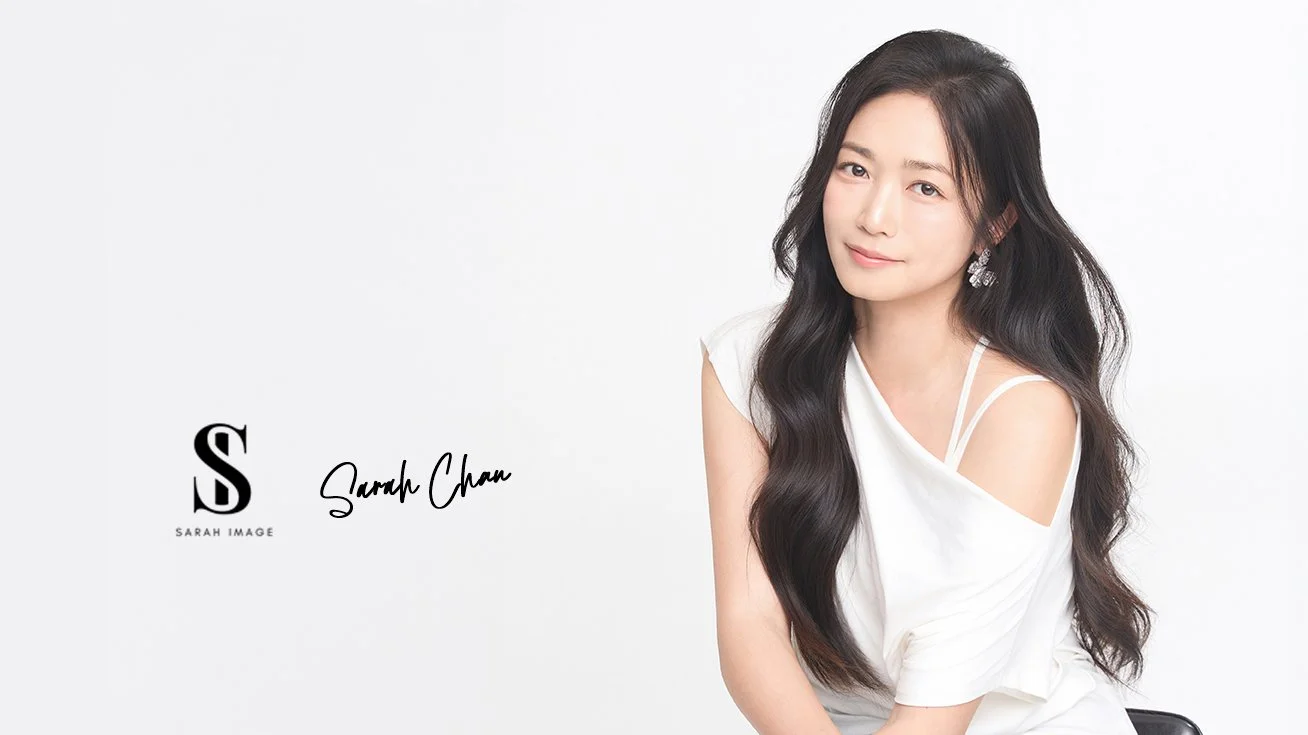
At Sarah Image, Sarah Chan brings more than 15 years of professional makeup experience, including her background as a celebrity makeup artist in Hong Kong, to brides throughout the San Francisco Bay Area.
Sarah specializes in natural, elegant, long-lasting bridal hair and makeup, with an understanding of Asian features, Chinese tea ceremonies, traditional kua styling, and modern Western bridal aesthetics.
Her approach begins with understanding your wedding day, your personal style, and the look you want to create.
Let's Plan Your Bridal Beauty
Recently engaged and beginning to plan your Bay Area wedding?
Whether you're preparing for a Chinese tea ceremony, Western wedding ceremony, or both, Sarah Image would love to learn more about your plans.
Inquire about your wedding date and bridal hair and makeup services at SarahImage.com.
When reaching out, share your wedding date, location, ceremony plans, and the bridal beauty style you have in mind.
Serving San Francisco, San Jose, Silicon Valley, the Peninsula, East Bay, and surrounding Bay Area wedding destinations.
Sarah Image | Bay Area Chinese Bridal Makeup Artist
Natural beauty. Thoughtful details. Timeless elegance.
